TL;DR
A prediction market matches you against another trader on an order book, and the price is whatever their orders clear at. A sportsbook sets the price itself and takes your side of the wager. Each contract pays $1.00 if the outcome happens and nothing if it does not.
- The CFTC calls exchange pricing "inapposite" to sports gambling, where the operator sets the odds.
- A sportsbook's cost arrives later as hold. An exchange bills a published fee per trade.
- Both venues let you sell before settlement, and both name the catch: a willing buyer.
A sportsbook wants you to be wrong. Buy a contract on Kalshi or Polymarket and the other side of your trade is another trader who read the event differently.
That one swap changes the price, the exit and the cost.
Who Takes the Other Side
It can feel like you are up against the platform. You are not. You sit opposite someone who wanted the other side.
Two machines, one event
Sportsbook
The operator is your counterparty
- It posts the price and carries the position itself.
- Cash-out, where offered, is a number it quotes you.
- Its economics arrive later, as hold on everything wagered.
Prediction market
Another trader is your counterparty
- The price is wherever two-sided orders clear.
- You exit by selling into a book other traders built.
- You pay a published per-trade fee, plus the spread.
Unlike sportsbooks, you are not betting against 'the house' – the counterparty to each trade is another Polymarket user.
Kalshi pairs a Yes buyer with a No buyer whose two prices add up to a dollar. Often that party is a market maker. Either way the venue earns a fee on the match and does not need you to lose.
Funded Prediction Trader (FPT) evaluates traders on Polymarket and Kalshi, because an exchange price is something skill can be measured against. Where an operator sets and moves its own line, there is nothing clean to measure. That is why a funded-trader model can exist here at all.
The Regulator Draws the Same Line
A Commodity Futures Trading Commission rule proposed on 12 June 2026 says an event contract's price is "determined by market participants' continuous buying and selling reaching an equilibrium," and calls that "inapposite" to legalized sports gambling.
A bookmaker does the opposite job. Steven Levitt's study in The Economic Journal found books post a price, carry the position themselves, and shade that price toward what bettors like.
It Looks Like Odds. It Is a Price.
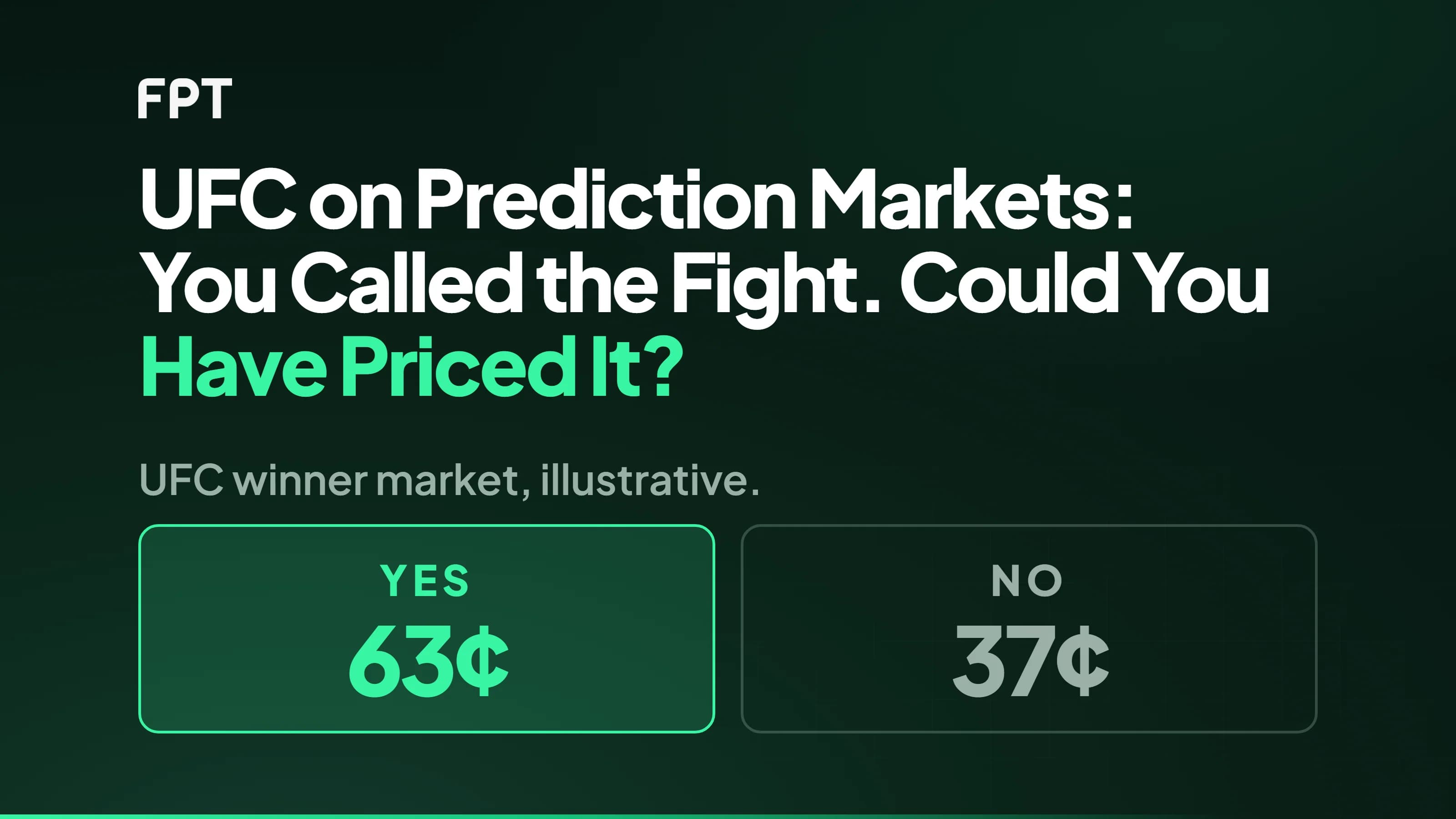
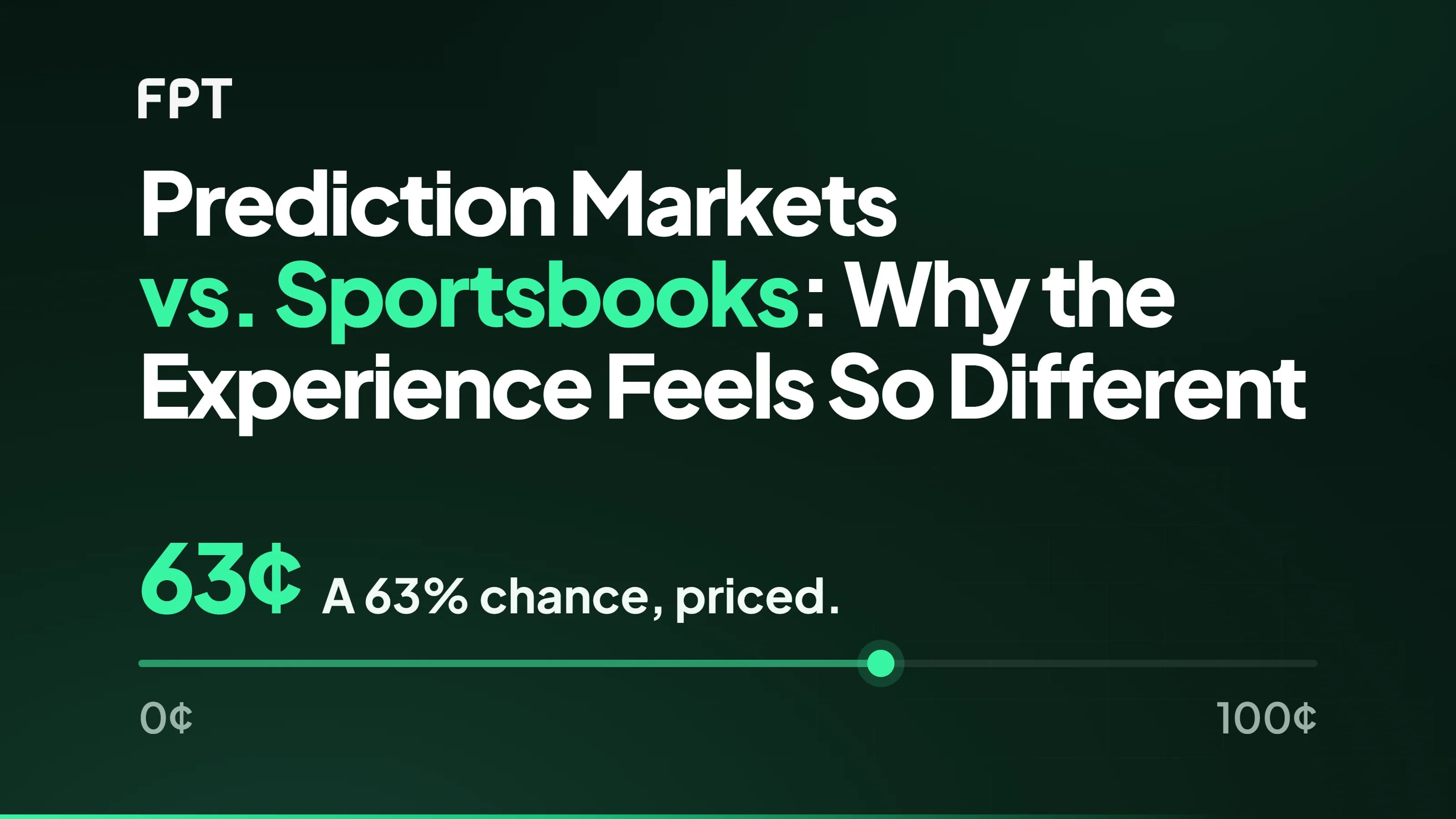
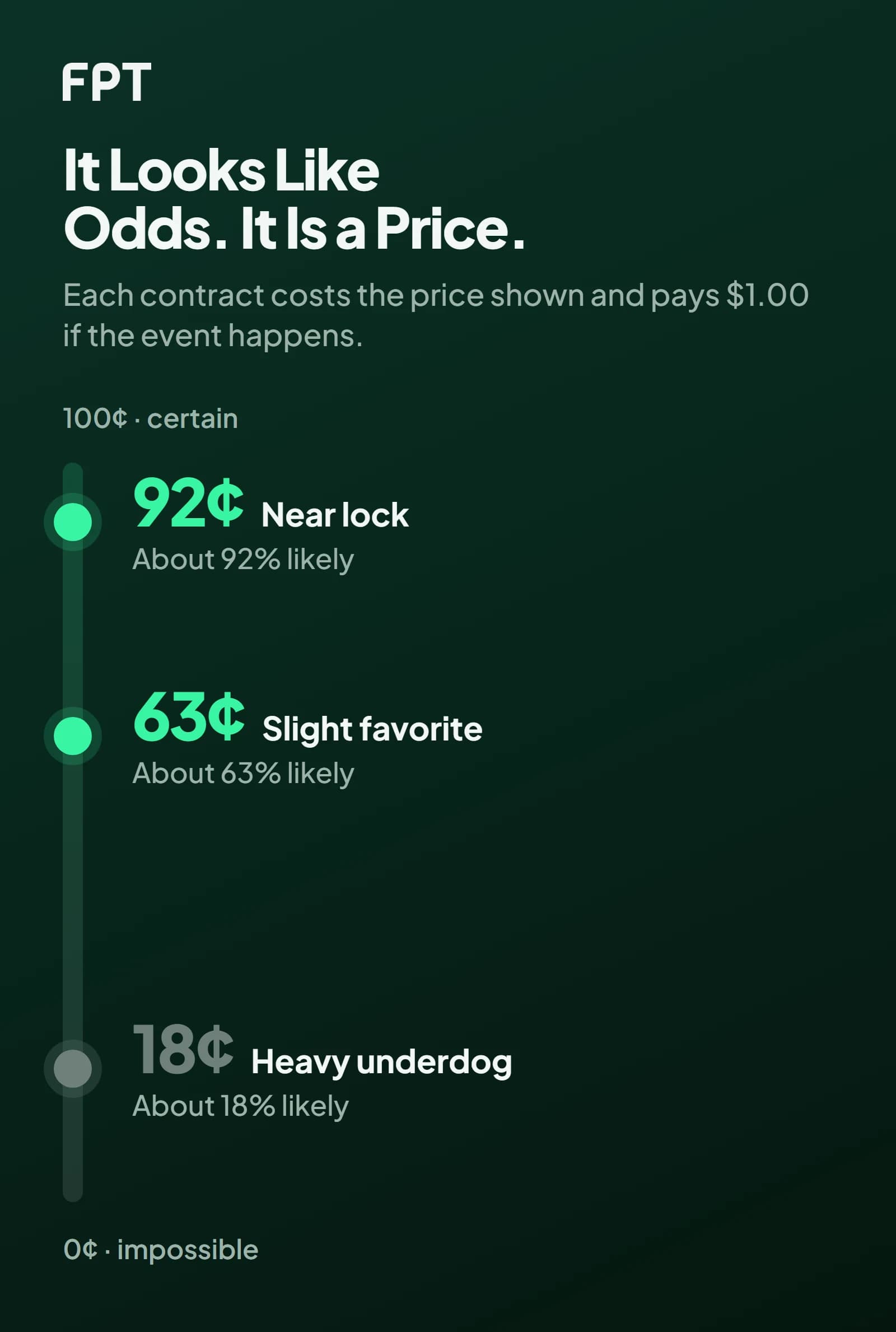
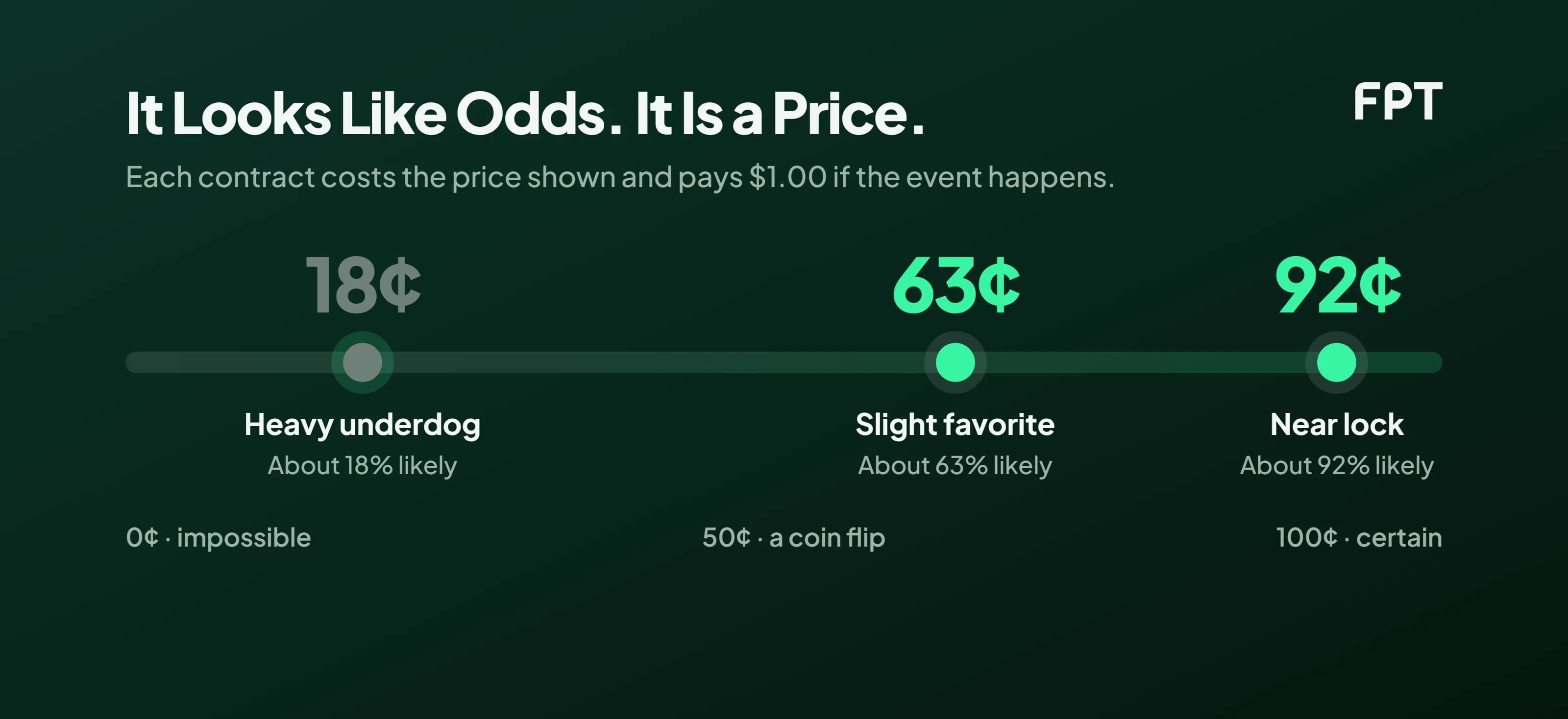
This is where newcomers stall. A market at 63 cents is not a payout ratio. It is what one contract costs, and it pays $1.00 if the event happens and nothing if it does not.
Reading a Price as a Probability
So a price that moves is the crowd changing its mind, in public. A posted line barely travels by comparison. Kalshi and Polymarket differ on tick sizes too, which matters the moment you want out.
Getting Out Before the Event Ends
Assume a position is locked until the whistle and you will sit on things you no longer want. Both venues publish an exit. Both publish its limit too.
Polymarket says shares can be sold any time before a market resolves, and Kalshi closes a position fully or partially. The catch is in Polymarket's own wording: a limit order "will only be executed if/when there is a willing buyer."
Who Prices Your Exit
Plenty of sportsbooks offer cash-out, so leaving early is not the difference. What differs is who prices the exit. On an exchange you sell into a book other traders built, not into a number the operator quotes.
That is also the first thing thin markets take away from you. One fight card followed from open to settlement shows the loop in real time.
Where the Cost Actually Sits
An exchange looks cheaper, but the two costs are not measured the same way. A sportsbook's economics are a hold: the slice of all wagers left with the operator once results land. Nobody is billed for it.
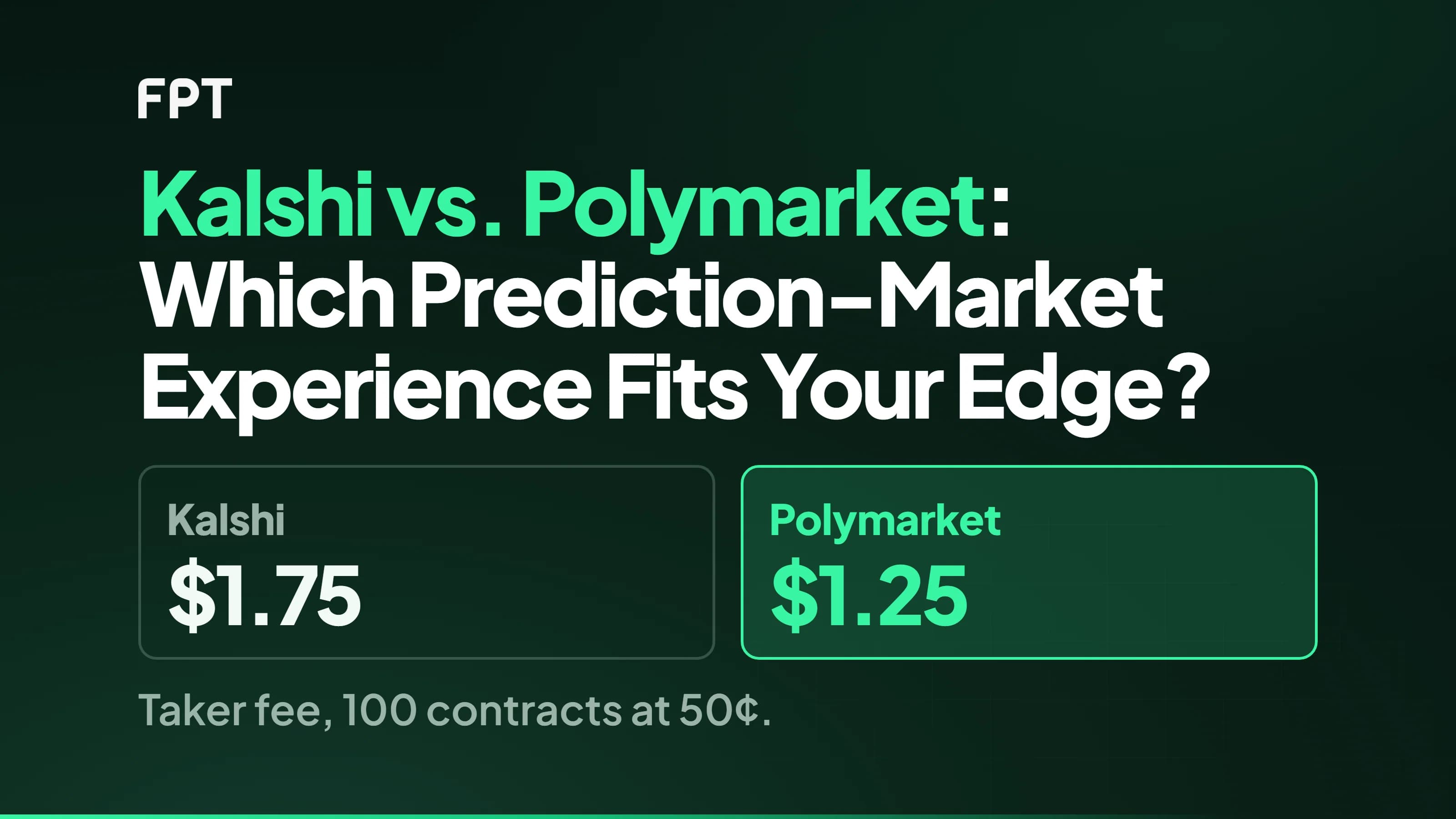
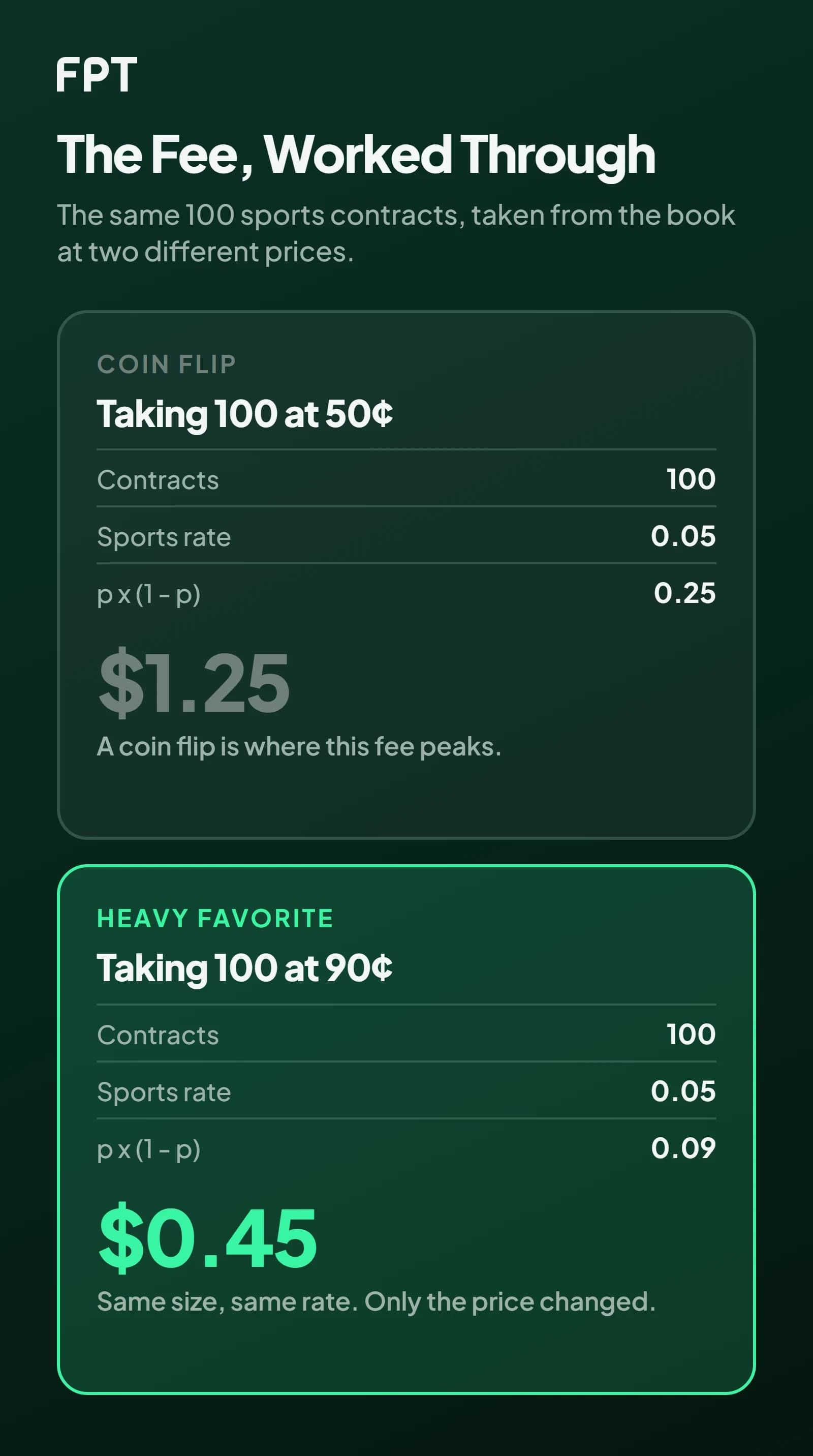
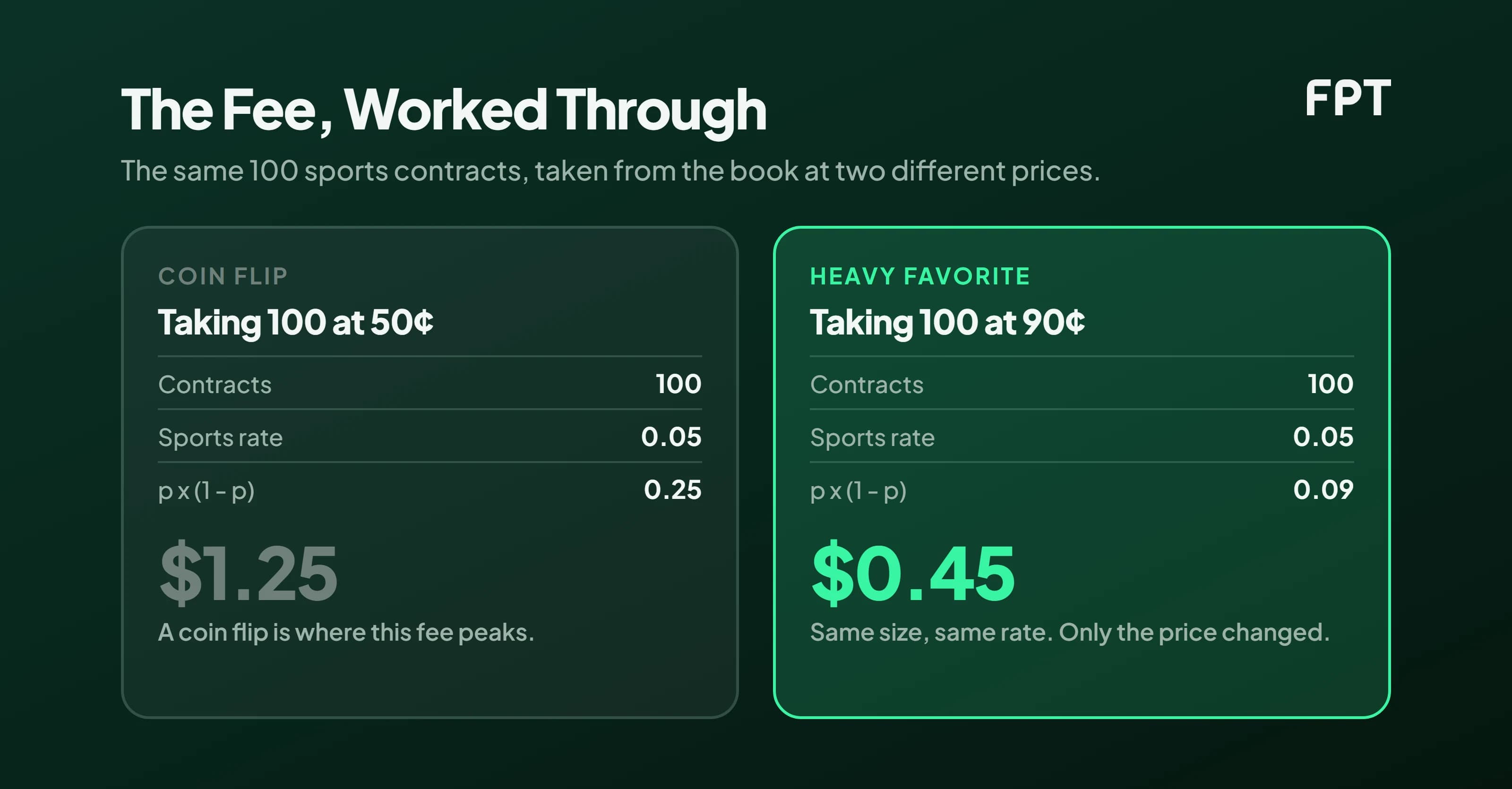
An exchange charges per trade and publishes the arithmetic. Polymarket bills takers only, at C x rate x p x (1 - p), with a sports rate of 0.05. Makers pay nothing. Kalshi uses the same shape at a 0.07 rate, rounded up, under its July 2026 fee schedule.
The Fee, Worked Through
Say you buy 100 sports contracts on Polymarket at 50 cents, crossing the spread to get filled. That is the most expensive corner of the fee formula, and it is still small.
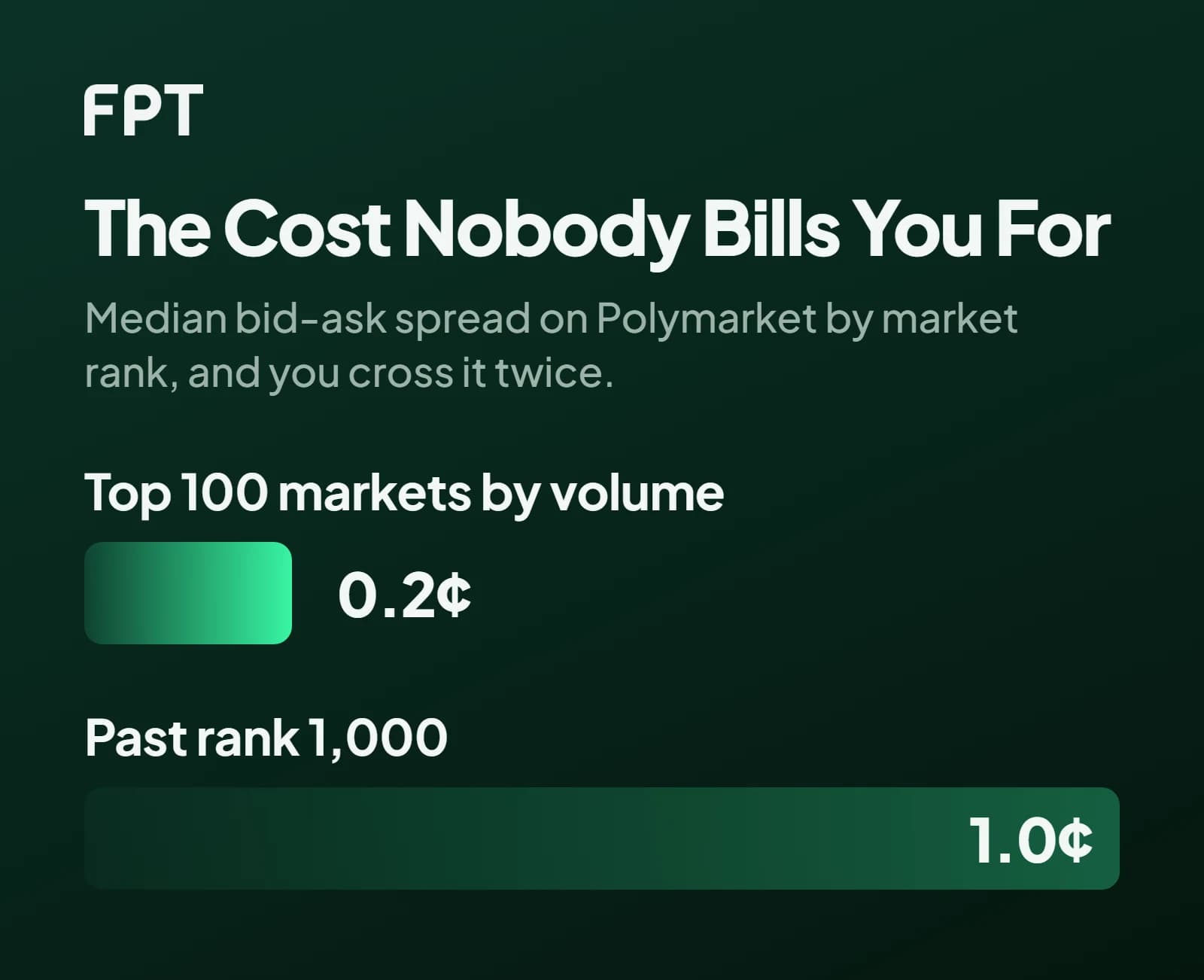
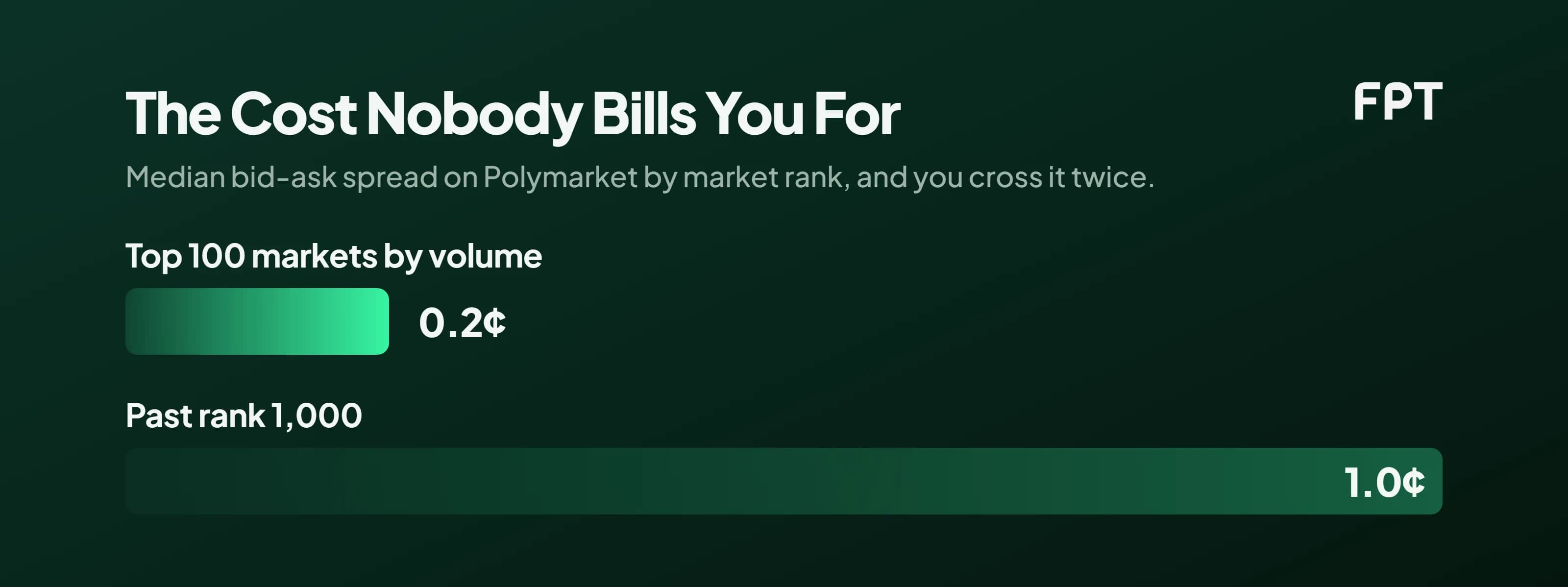
The cost nobody publishes is the spread, and you cross it twice. On 26 July 2026, Polymarket's 100 busiest markets showed a median spread of two tenths of a cent, and a full cent past rank 1,000.
Who Settles It, and How Long It Takes
Nobody at the venue watches the game and grades it. The answer was written before you traded, and it names its data source in advance.
Kalshi names that source in each contract's terms, so settlement is a lookup, not a judgment call. Grading takes an hour to more than twelve. Polymarket runs the same question through the UMA oracle.
Polymarket settlement, step by step
- Close
Trading stops
The market shuts. Nothing is graded yet.
- Proposal
Someone proposes the answer
A proposer posts a bond behind it.
- 2 hours
Anyone can dispute it
Unchallenged markets finish about two hours later.
- ~48 hours
Disputes go to a vote
UMA token holders decide. Disputed markets run four to six days.
Read the Rule, Not the Matchup
For example, a Polymarket market on a 1 August 2026 UFC bout resolves 50-50 if the fight is a draw or technical draw, ruled a no contest, not scored, canceled, or postponed beyond 15 August.
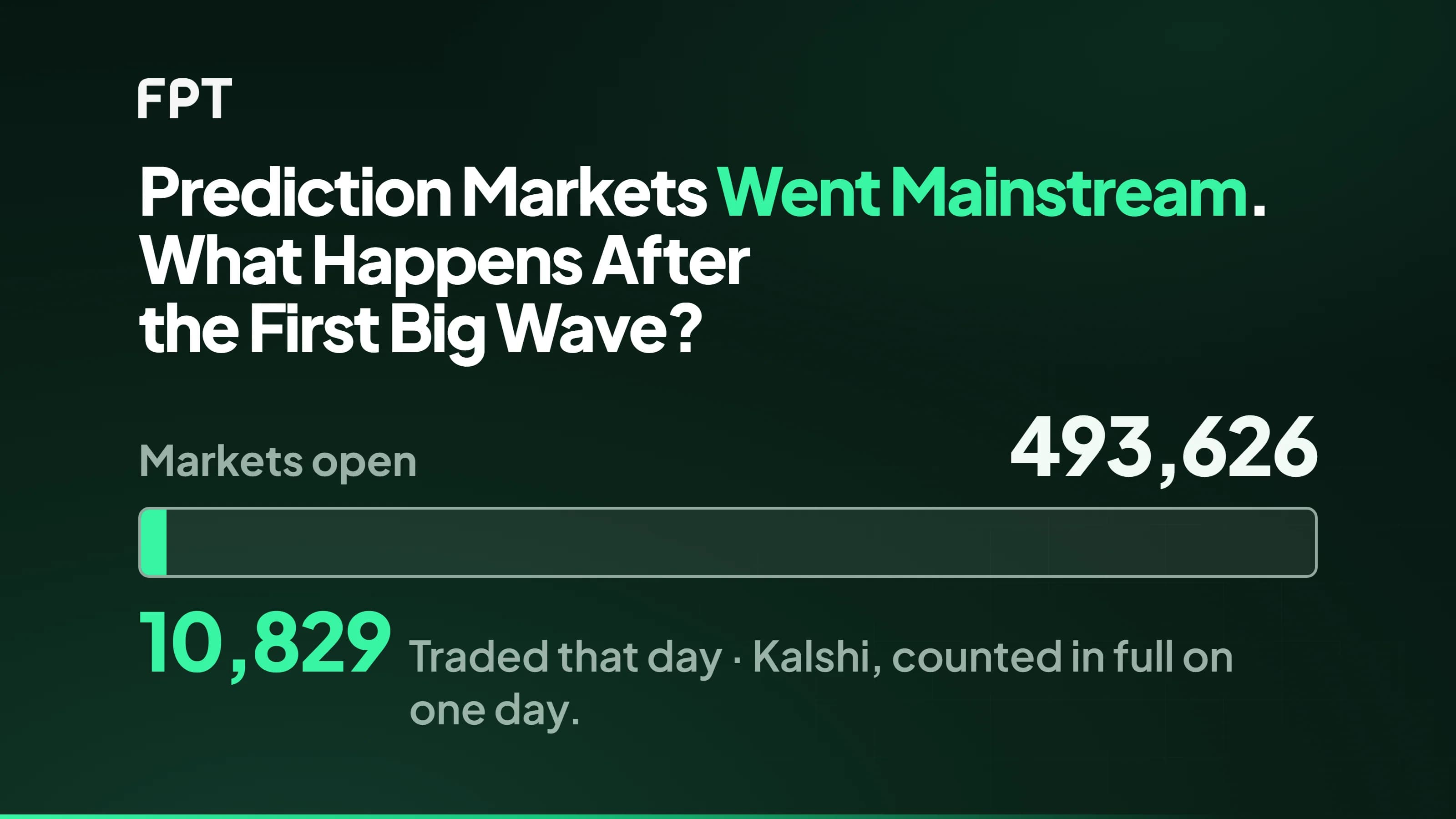
Thin books bite too. On 26 July 2026, 84 percent of Polymarket's 80,443 open markets had not traded at all in the previous day: how big prediction markets have really become.
Before Your First Contract
Run this before your first contract
- Read the resolution rules first. Find the draw, no contest and postponement clauses.
- Check which data source settles the contract, and how long grading takes.
- Price the spread you cross twice, and ask what selling right now would fetch.
- Open the venue's eligibility page. Kalshi publishes no jurisdiction list.
The rulebook is still moving too: comments on that CFTC "gaming" proposal closed on 27 July 2026. The next wall after mechanics is size, which is what a prediction-market prop firm exists to solve.
The habit is simple. Read the rules, then read the book. The first tells you what you are being paid for. The second tells you what it costs to change your mind.
Sources & Method
Every mechanic here was checked against the venue's or the regulator's own document rather than against secondary coverage. Sportsbook economics come from Nevada's regulator-published revenue report and from peer-reviewed work on price setting; the liquidity figures are a same-day census of Polymarket's public market API.
- Prediction Markets; Public Interest Determinations (Proposed Rule), 91 FR 35806 — Commodity Futures Trading Commission, Jun 12, 2026. Accessed Jul 26, 2026.
- Why are Gambling Markets Organised so Differently from Financial Markets? (The Economic Journal 114(495), April 2004, pp. 223-246) — The Economic Journal (author-hosted copy, University of Chicago). Accessed Jul 26, 2026.
- Nevada Gaming Control Board Monthly Revenue Report, May 2026 — Nevada Gaming Control Board, Jun 23, 2026. Accessed Jul 26, 2026.
- What is Polymarket? — Polymarket Help Center, May 2, 2026. Accessed Jul 26, 2026.
- Can I Sell Early? — Polymarket Help Center, Jan 11, 2026. Accessed Jul 26, 2026.
- Closing or Modifying a Position — Kalshi Help Center, Jun 3, 2026. Accessed Jul 26, 2026.
- Trading Fees — Polymarket Help Center, Jul 10, 2026. Accessed Jul 26, 2026.
- Kalshi Fee Schedule (last updated and effective July 7, 2026) — Kalshi, Jul 7, 2026. Accessed Jul 26, 2026.
- What are prediction markets? — Kalshi Help Center, Mar 19, 2026. Accessed Jul 26, 2026.
- How are prices determined? — Kalshi Help Center, Mar 10, 2026. Accessed Jul 26, 2026.
- Market Outcomes — Kalshi Help Center, Mar 17, 2026. Accessed Jul 26, 2026.
- Resolution — Polymarket Documentation. Accessed Jul 26, 2026.
- Signing Up as an Individual — Kalshi Help Center, Mar 10, 2026. Accessed Jul 26, 2026.
- Polymarket Gamma API, active-market census (closed=false, active=true) — Polymarket. Accessed Jul 26, 2026.
- Polymarket CLOB order book endpoint — Polymarket. Accessed Jul 26, 2026.
- Polymarket Gamma API, event record for the 1 August 2026 UFC bout Blachowicz vs. Stirling — Polymarket. Accessed Jul 26, 2026.
Common Questions
Is a prediction market the same thing as a sportsbook?
Structurally, no. On a prediction market your trade is matched against another user on an order book, and the price moves as people trade. A sportsbook posts a price itself and takes the other side of your position.
What does a price of 63 cents actually mean?
It is what one contract costs. The contract pays $1 if the outcome happens and $0 if it does not, so 63 cents is the market's implied probability of about 63%.
Can I sell a position before the event finishes?
Both venues document early exit. Polymarket says shares can be sold any time before resolution, and Kalshi lets a position be closed fully or partially. In each case you need a willing buyer at your price.
Who decides whether a market resolves Yes or No?
A rule written before you traded. Kalshi names the settlement source in each contract's terms; Polymarket routes resolution through the UMA oracle, with a two-hour window in which anyone can dispute the proposed outcome.
How do I know whether I can trade on these venues?
Check the venue's own eligibility documentation rather than a third-party list. Kalshi's help center does not publish a jurisdiction list and states that ensuring your access is permissible and lawful is your own responsibility.
Referenced on this site