TL;DR
Fight knowledge only becomes money when it becomes an order on an exchange. Kalshi and Polymarket both listed per-fight UFC markets in July 2026, covering winner, method, round and distance. Other traders set the price, positions can be closed before the final bell, and published settlement text decides the payout.
- Both venues listed markets for the August 2026 Fight Night card in Belgrade.
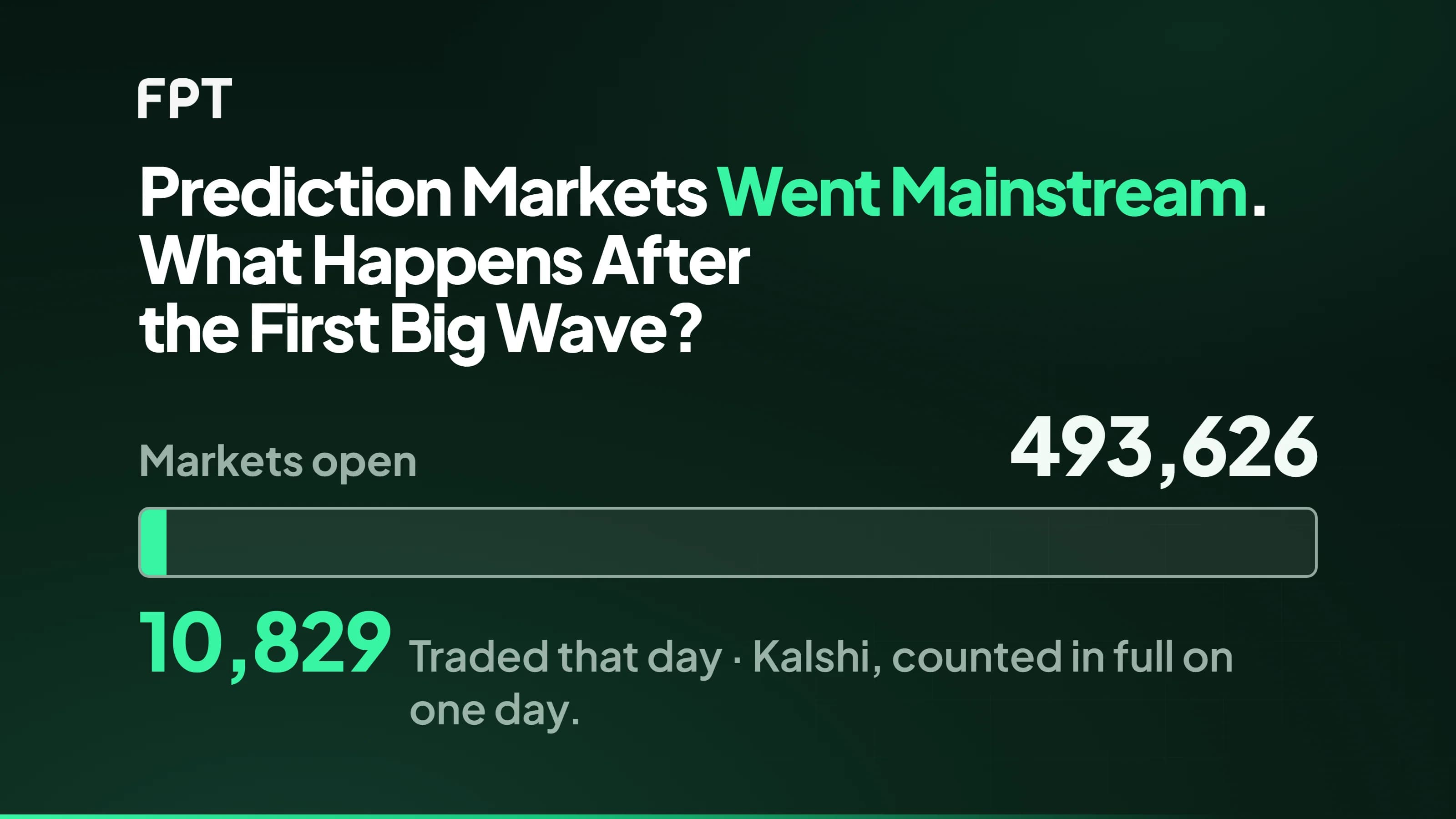
- Sports made up roughly 80% of Kalshi's volume since mid-2024, per Pew Research Center.
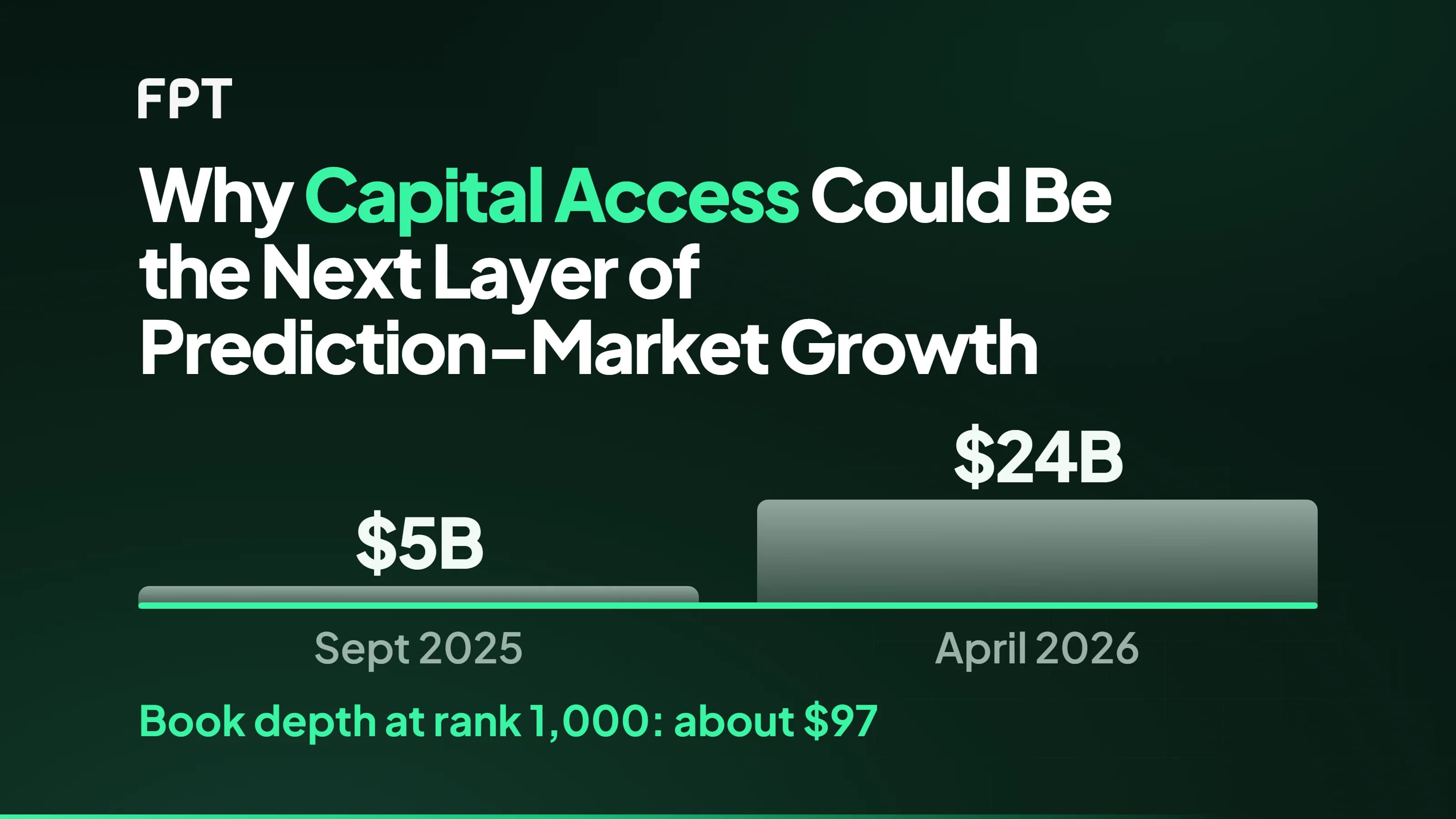
- Away from the busiest markets, the resting depth at the best price collapses.
Tuesday night, group chat. You call it: short-notice replacement, rough weight cut, a guy who has never had to work off his back. Saturday it lands the way you said. Your return on being right is a screenshot.
Being right and getting paid are two different skills. Kalshi and Polymarket both list per-fight UFC contracts, so the second one is open to you. It is also the harder one.
One Card, Broken Into Contracts
On July 26, 2026 Kalshi's trade API held ten open UFC Fight events, all of them bouts on the August 1 card in Belgrade. Each one listed as two mutually exclusive contracts, one per fighter.
Funded Prediction Trader (FPT) runs a one-step evaluation and then a funded account on both venues, so closing the gap between calling a fight and pricing one is the second skill we work on for a living. FPT is not affiliated with Kalshi or Polymarket, and nothing below is a pick.
That is only the moneyline. Kalshi runs separate series for method of victory, round of victory, total rounds, whether a bout goes the distance, and whether it happens at all. Polymarket bundles knockout, submission, distance and round-total markets.
The Thought You Actually Have Is Rarely a Moneyline
Almost none of that is a moneyline thought. You do not think a fighter wins. You think he empties the tank in round two and gets held down in round three — and there is a contract that prices exactly that.
One bout, three contracts
He Wins by Knockout
Method of victory (KXUFCMOV)
- The moneyline pays the same either way.
It Never Reaches the Judges
To go the distance (KXUFCDISTANCE)
- A finish, by either fighter.
It Ends in the Third
Round of victory (KXUFCVICROUND)
- Not who wins, but when.
Pick the Contract That Settles Your Read
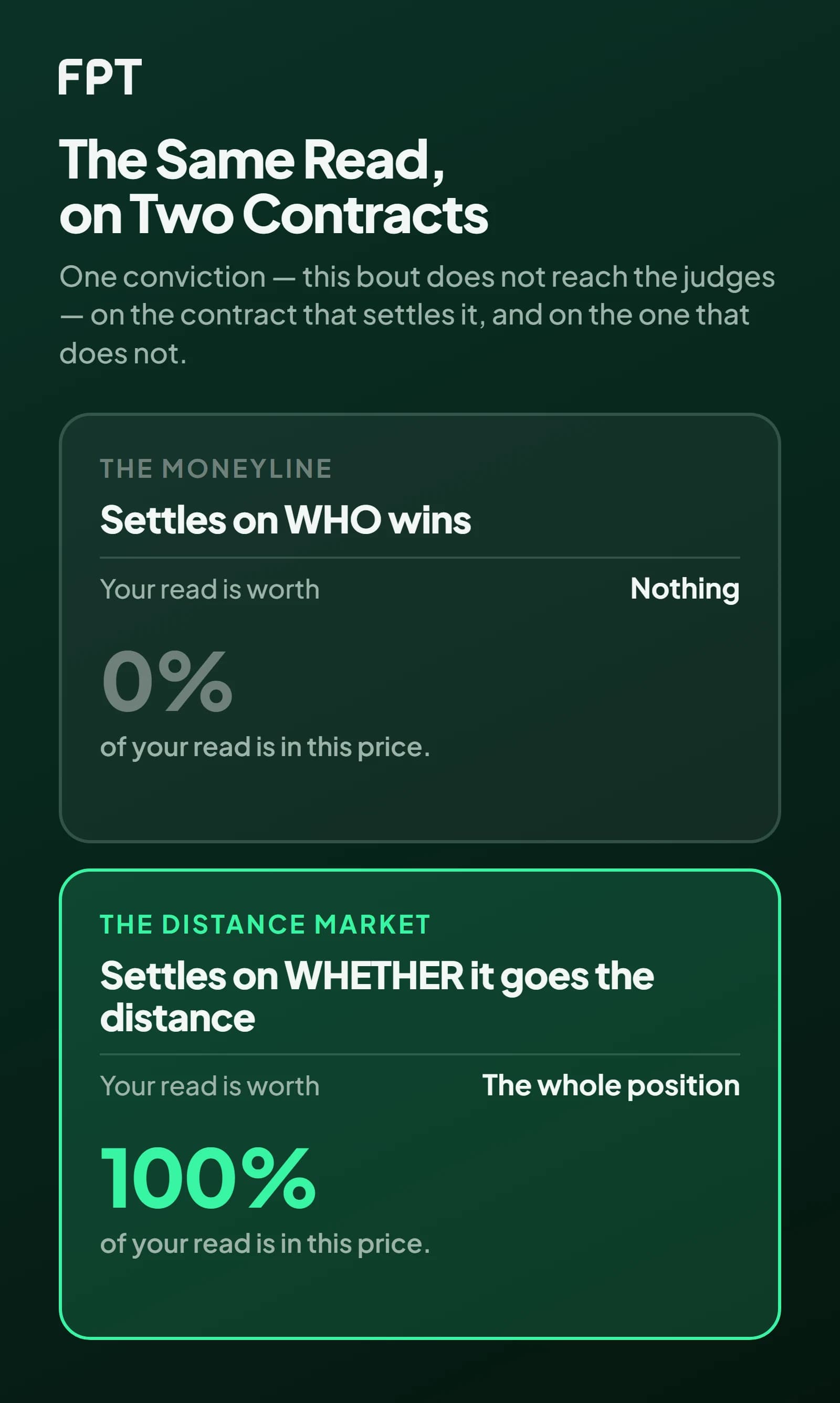
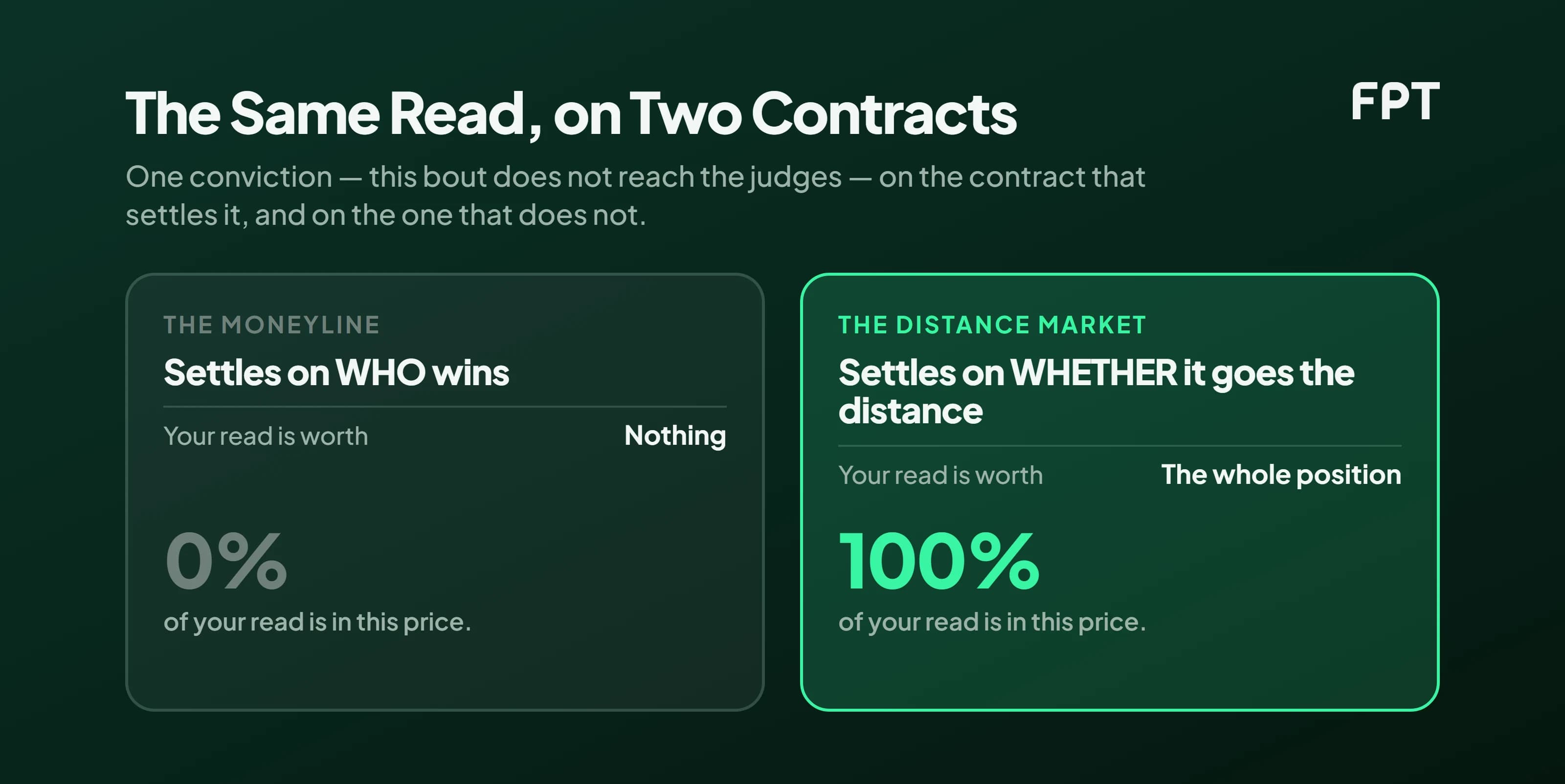
Say you are certain a bout ends inside the distance. The moneyline pays you nothing for that certainty, because it settles the same whether the win comes by knockout or by decision. The distance market is the one that prices your actual opinion.
Nobody Posts the Price
A prediction-market price is the level two traders agreed on, sitting in a public book you can hit or join. Polymarket says your counterparty is another user, not a house. Kalshi is a CFTC-regulated exchange. That plumbing is why it feels nothing like a sportsbook.
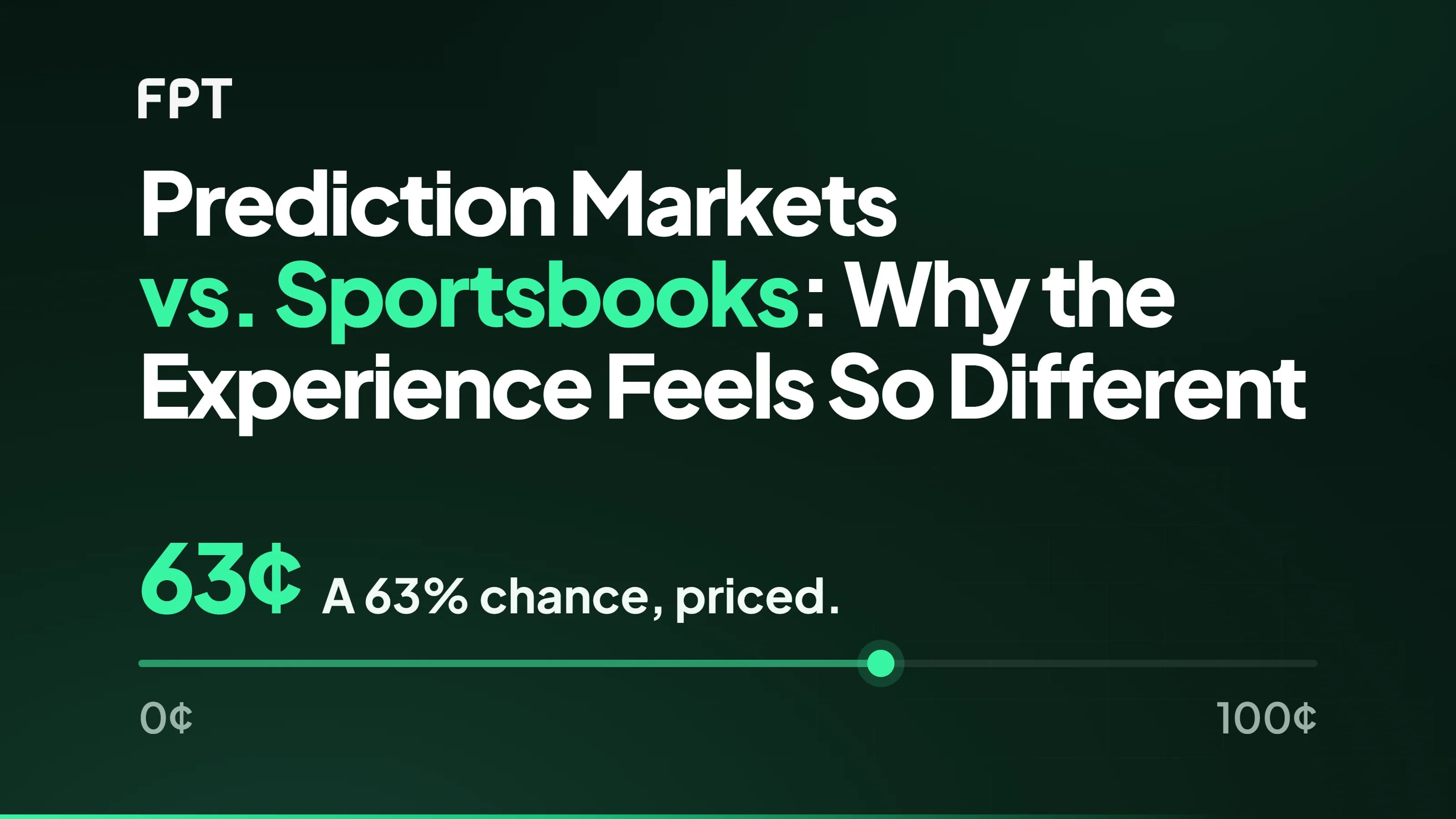
A Price Is a Probability
Your read does not reach that price by being correct. It gets there when you put an order in the book and somebody takes the other side. The question is how much force that takes.
How Thin the Book Really Gets
We sampled live Polymarket order books across the whole active market list, ranked by the previous day's volume. The answer was uncomfortable. Between the busiest handful of markets and rank 500, the money resting within a cent of the best price falls by more than an order of magnitude — the full depth measurement lives with the market census.
On the day we sampled, 84% of Polymarket's active markets traded nothing at all, and a prelim bout sits far closer to that end than to the top. Thin is not a metaphor: it is the size you can get filled at your price.
Three Places the Cost Actually Lands
The Three Leaks
You Pay Most Where You Feel Sure
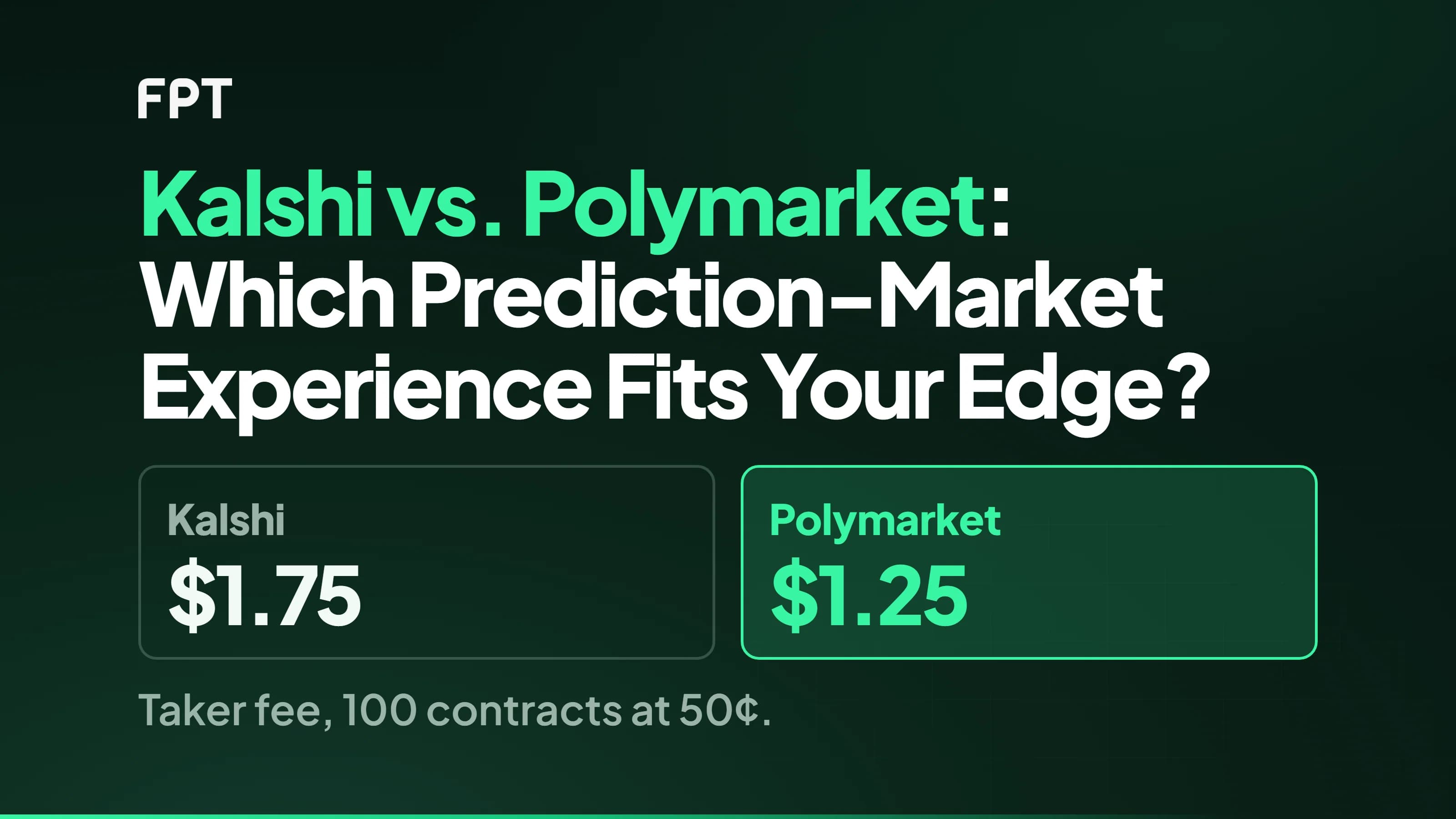
Both venues price the fee off the contract price, and the curve peaks in the middle. A true pick-em is the most expensive square on the board.
Your Edge Lives in the Thinnest Book
The read worth having is specific: a round, a finish, a stoppage that never reaches the cards. Those are the quietest markets on any card.
The Text Decides the Payout
A no contest, a technical draw, a bout pushed past a cutoff date: none of that is a fight outcome, and all of it is a settlement outcome.
What the Fee Curve Costs in Practice
The first rule is easier to see with numbers. For example, price the same order twice on Kalshi — once on a coin-flip bout, once on a heavy long shot.
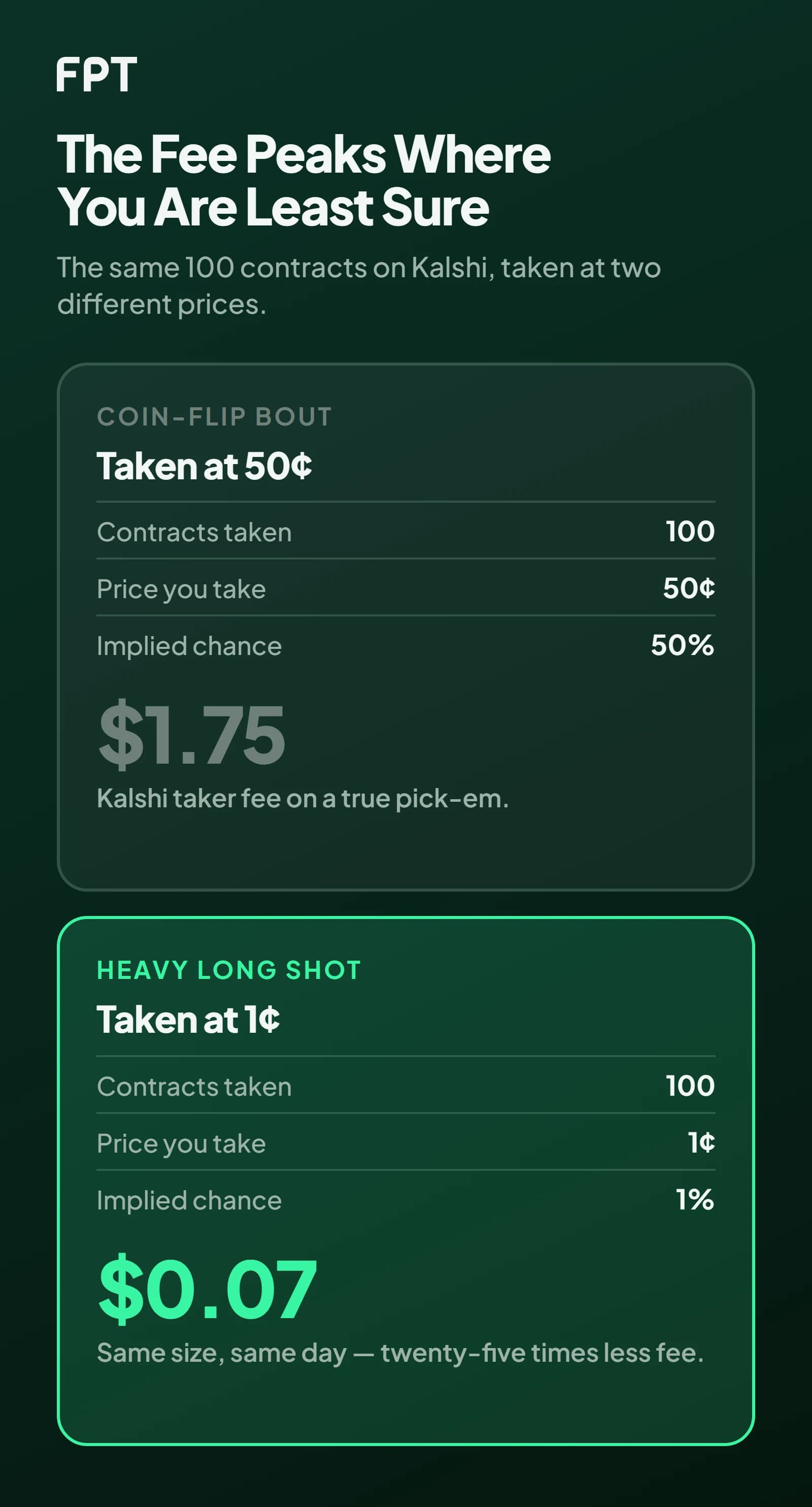
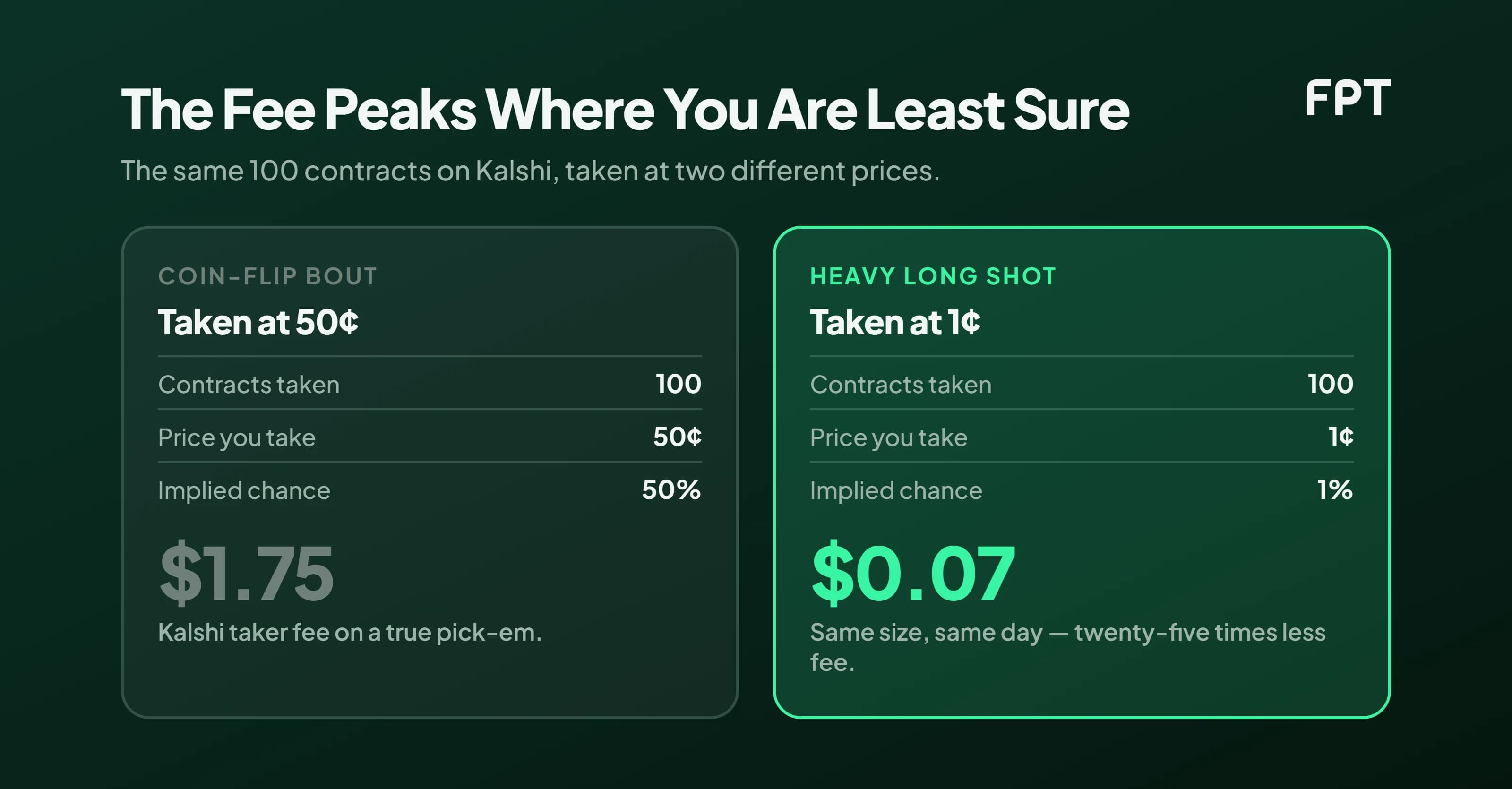
Kalshi publishes that fee as a formula, not a flat rate. Polymarket never charges makers, and uses a curve of the same shape, at its own rate, for sports takers.
Read the Settlement Before the Matchup
You Can Leave Before the Final Bell
A position is not a ticket. It is shares, and shares can be sold while the cage door is still shut. Kalshi's record for the July 25 winner contract carried can_close_early set to true, and Polymarket runs a central limit order book. You exit at whatever somebody is quoting.
Two Venues, Two Settlement Machines
The settlement text is the part you cannot renegotiate. Polymarket put the awkward cases into one sentence.
If the fight is declared a draw or technical draw, ruled a No Contest, not scored, canceled, or postponed beyond August 15, 2026, this market will resolve 50-50.
Kalshi handles it differently. Its UFC Fight series names The Wall Street Journal, ESPN and Fox Sports as settlement sources, and its method markets carry Draw or No Contest as a tradeable outcome, not a refund. Polymarket routes settlement through UMA's optimistic oracle.
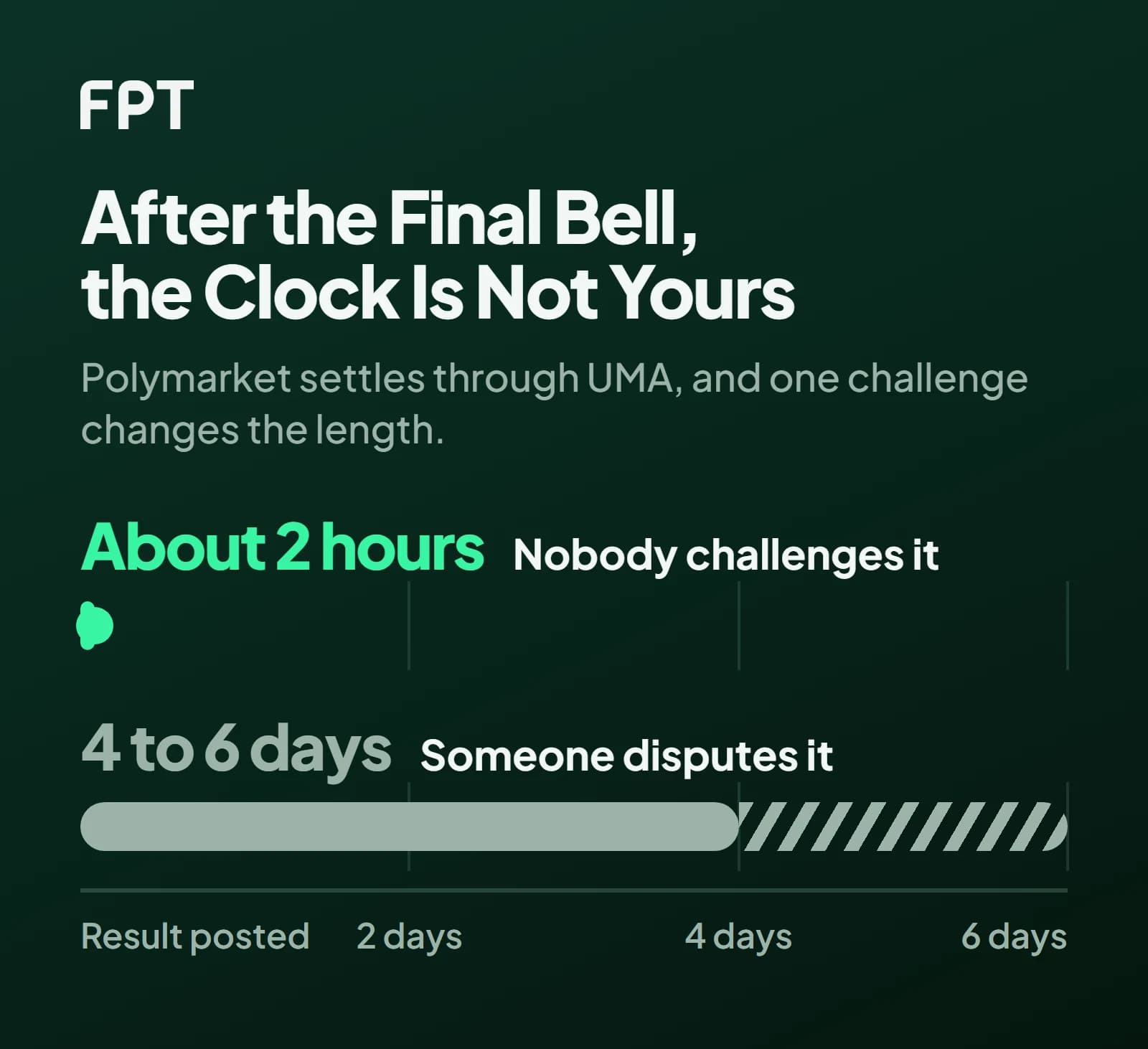

Where you can trade any of this is its own question. Venue availability may depend on your location, exchange access, market availability, and applicable restrictions, and the US legal position on sports event contracts was still unsettled in mid-2026, with appeals running in both directions and a CFTC rulemaking open. Which venue lists what is covered in how Kalshi and Polymarket differ in practice.
How to Get Size Behind a Read
Some readers turn this into a process, and the constraint they hit is rarely conviction. It is size. A read you would take for a few hundred dollars is not a business, and most people cannot responsibly put more behind it.
What the Funded Account Measures
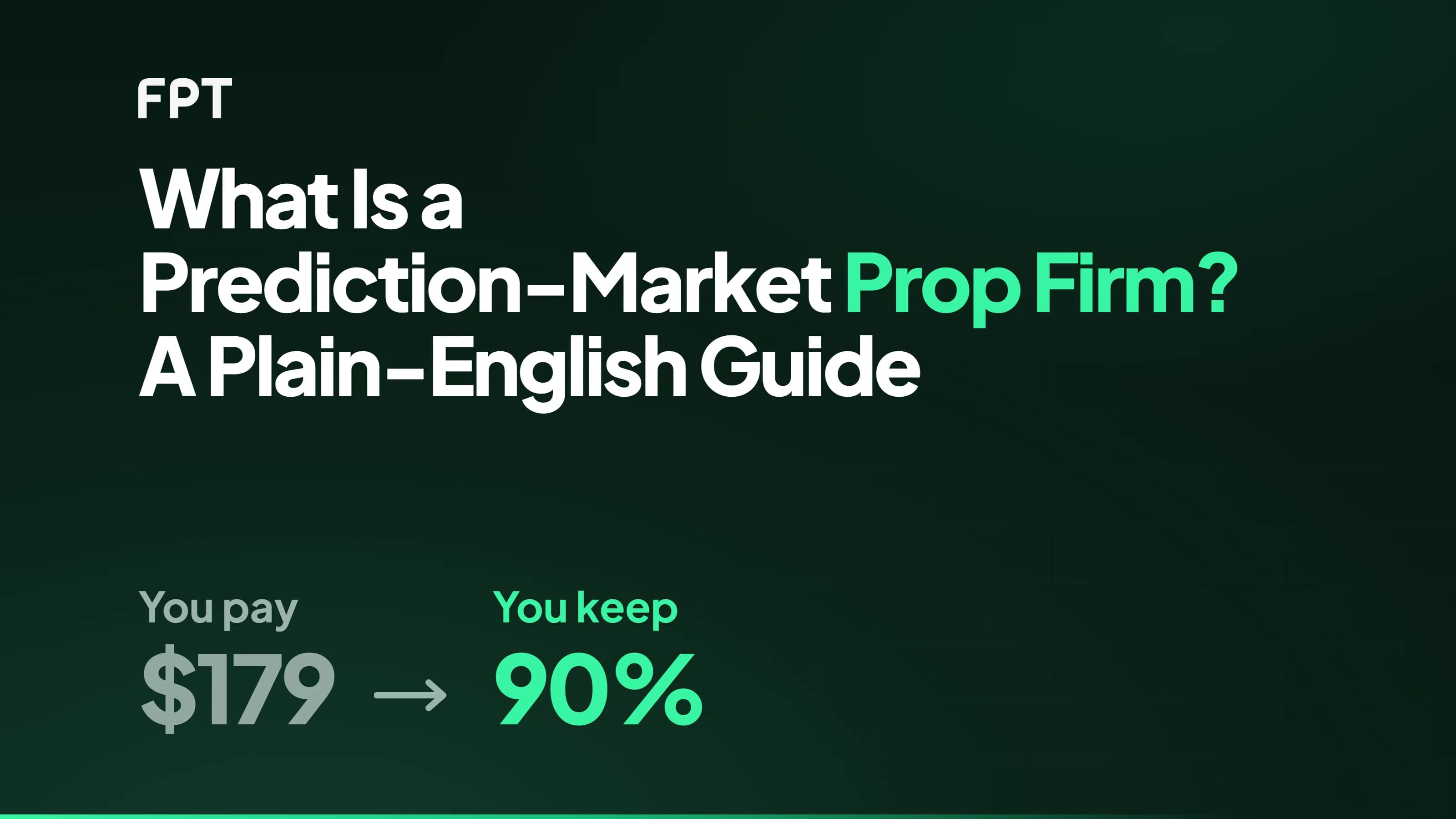
That is the problem the funded-trader model exists for. With FPT you pass a one-step evaluation, then trade a funded FPT Scale account on Polymarket and Kalshi. You keep 90% of your profit, from your first payout, and payouts are sent within 48 hours of approval. FPT Scale accounts are simulated trading accounts. The account size — $25k, $50k or $100k — is a rule benchmark, not cash: it is what the profit target, max loss and trailing drawdown are measured against.
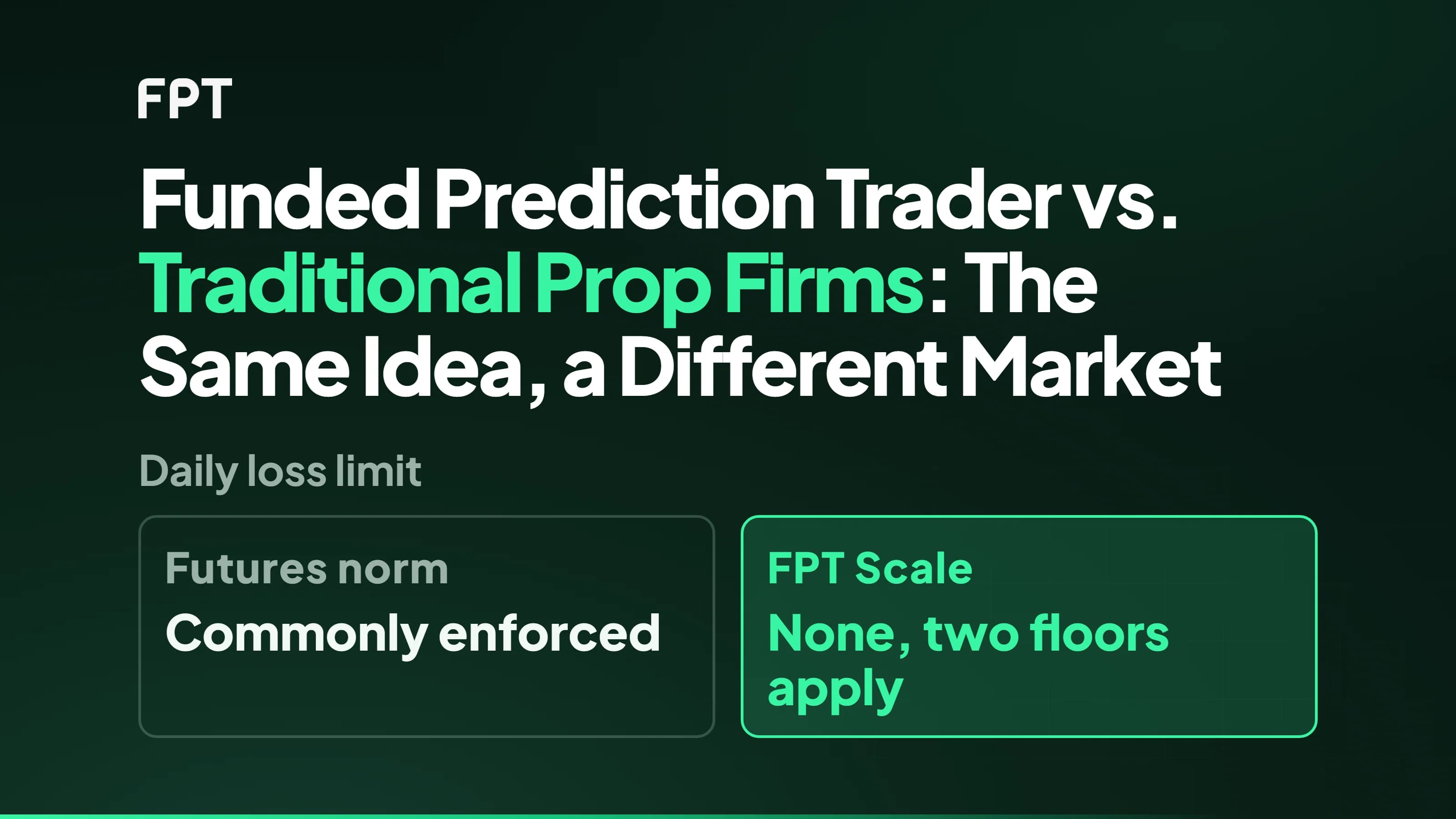
The rules that matter most on a fight card are easy to state. There is no separate daily loss limit, but a max-loss rule and an end-of-day trailing drawdown both apply. And any one market is capped at 5% of its 24-hour volume — the thin-book problem, written into the rulebook. Your total open exposure may not exceed your account's max open size, and approved payouts raise both that size and your payout cap until the account reaches its maximum tier.
Here is what a prediction-market prop firm actually is, if the model is new to you.
Before the Next Card
Four questions worth more than your read
- Which contract expresses what I actually think?
- If it is the moneyline, was the thought specific enough to be worth money?
- What is resting in the book at my price, and will it still be there when I want out?
- Did I read the settlement text before I read the matchup?
Not one of those asks who wins. That is the point. The first skill tells you what you think. The second turns it into a price, and pricing is a skill you can build.
Sources & Method
Market structure was read from Kalshi's public trade API and Polymarket's Gamma and CLOB APIs on July 26, 2026, then cross-checked against each venue's own documentation, fee schedule and resolution rules. The depth and concentration figures are our own measurements: a complete keyset census of Polymarket's active markets, plus order books pulled per token and grouped by 24-hour volume rank. They are a single-day snapshot taken on a Sunday, so treat the shape as durable and the levels as perishable. Event names and dates were confirmed on ufc.com. Listing counts move as bouts are added, settled or pulled. No pick, forecast or historical price path appears anywhere in this piece.
- Kalshi Trade API: series KXUFCFIGHT (UFC Fight) — Kalshi. Accessed Jul 26, 2026.
- Kalshi Trade API: open UFC Fight events — Kalshi. Accessed Jul 26, 2026.
- Kalshi Trade API: UFC Method of Victory event, Ankalaev vs. Guskov — Kalshi. Accessed Jul 26, 2026.
- Kalshi Trade API: market KXUFCFIGHT-26JUL25ANKGUS-ANK — Kalshi. Accessed Jul 26, 2026.
- Polymarket Gamma API: UFC Fight Night, Blachowicz vs. Stirling — Polymarket. Accessed Jul 26, 2026.
- Polymarket Gamma API: keyset census of active markets — Polymarket. Accessed Jul 26, 2026.
- Polymarket CLOB API: order book endpoint — Polymarket. Accessed Jul 26, 2026.
- What is Polymarket? — Polymarket. Accessed Jul 26, 2026.
- Resolution — Polymarket Documentation — Polymarket. Accessed Jul 26, 2026.
- Trading Fees — Polymarket Help Center — Polymarket, Jul 10, 2026. Accessed Jul 26, 2026.
- Kalshi Fee Schedule, July 2026 — Kalshi, Jul 7, 2026. Accessed Jul 26, 2026.
- How is Kalshi regulated? — Kalshi. Accessed Jul 26, 2026.
- Signing Up as an Individual — Kalshi Help Center — Kalshi, Mar 10, 2026. Accessed Jul 26, 2026.
- KalshiEX, LLC v. Flaherty, No. 25-1922 (opinion of the court) — United States Court of Appeals for the Third Circuit, Apr 6, 2026. Accessed Jul 26, 2026.
- Trading volume on prediction markets has soared in recent months — Pew Research Center, May 27, 2026. Accessed Jul 26, 2026.
- UFC Events — UFC. Accessed Jul 26, 2026.
- Kalshi Trade API: series KXUFCOCCUR (Will UFC fight take place?) — Kalshi. Accessed Jul 26, 2026.
- Fee Schedule — Kalshi — Kalshi. Accessed Jul 26, 2026.
- Kalshi appeals after federal judge sides with New York gambling regulators — Gothamist, Jul 8, 2026. Accessed Jul 26, 2026.
- CFTC Proposes Rule on Event Contracts Involving Enumerated Activities (Release 9249-26) — Commodity Futures Trading Commission, Jun 10, 2026. Accessed Jul 26, 2026.
Common Questions
Do Kalshi and Polymarket list UFC fights?
Both did as of July 26, 2026. Kalshi ran a UFC Fight series plus separate method, round and distance series; Polymarket listed per-fight winner markets alongside knockout, submission and round-total markets. Listings appear close to a card, and neither venue lists every bout.
What does a price like 63 cents mean on a fight market?
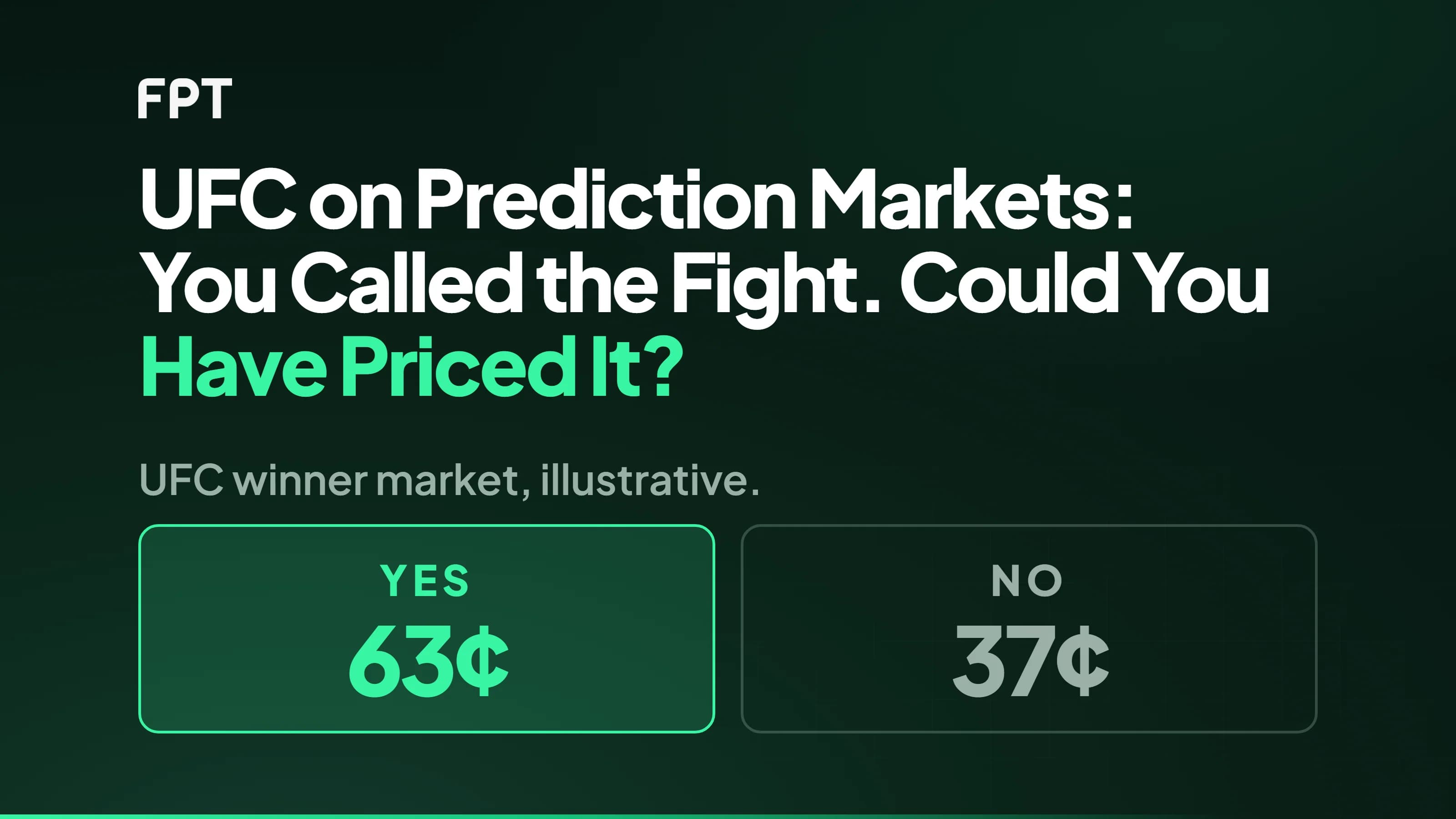
It is an implied probability. A contract quoted at 63 cents implies the market puts the outcome at roughly 63%, and the winning side redeems for $1.00 at resolution. Polymarket describes its prices as the current probability of an event occurring.
Can you sell a fight position before the fight is over?
Yes, subject to liquidity. Kalshi's market record for the July 25, 2026 winner contract carried a can-close-early flag, and Polymarket runs a central limit order book where a position is closed by selling into resting bids. The exit price is whatever someone is quoting at that moment.
What happens to the contract if a fight is a draw or a no contest?
That is a settlement question, not a sporting one. Polymarket's August 1, 2026 winner market resolved 50-50 on a draw, technical draw, no contest, cancellation or postponement past August 15, 2026. Kalshi's method and round markets carry Draw or No Contest as a distinct outcome.
Referenced on this site