TL;DR
Prediction markets solved distribution before they solved money. On both major venues about a hundred contracts carry more than half of a day's volume, and traders with a real read on the rest run out of funds long before they run out of views. Evaluation-based funding is one bridge, and this piece makes the case and shows the measurements behind it.
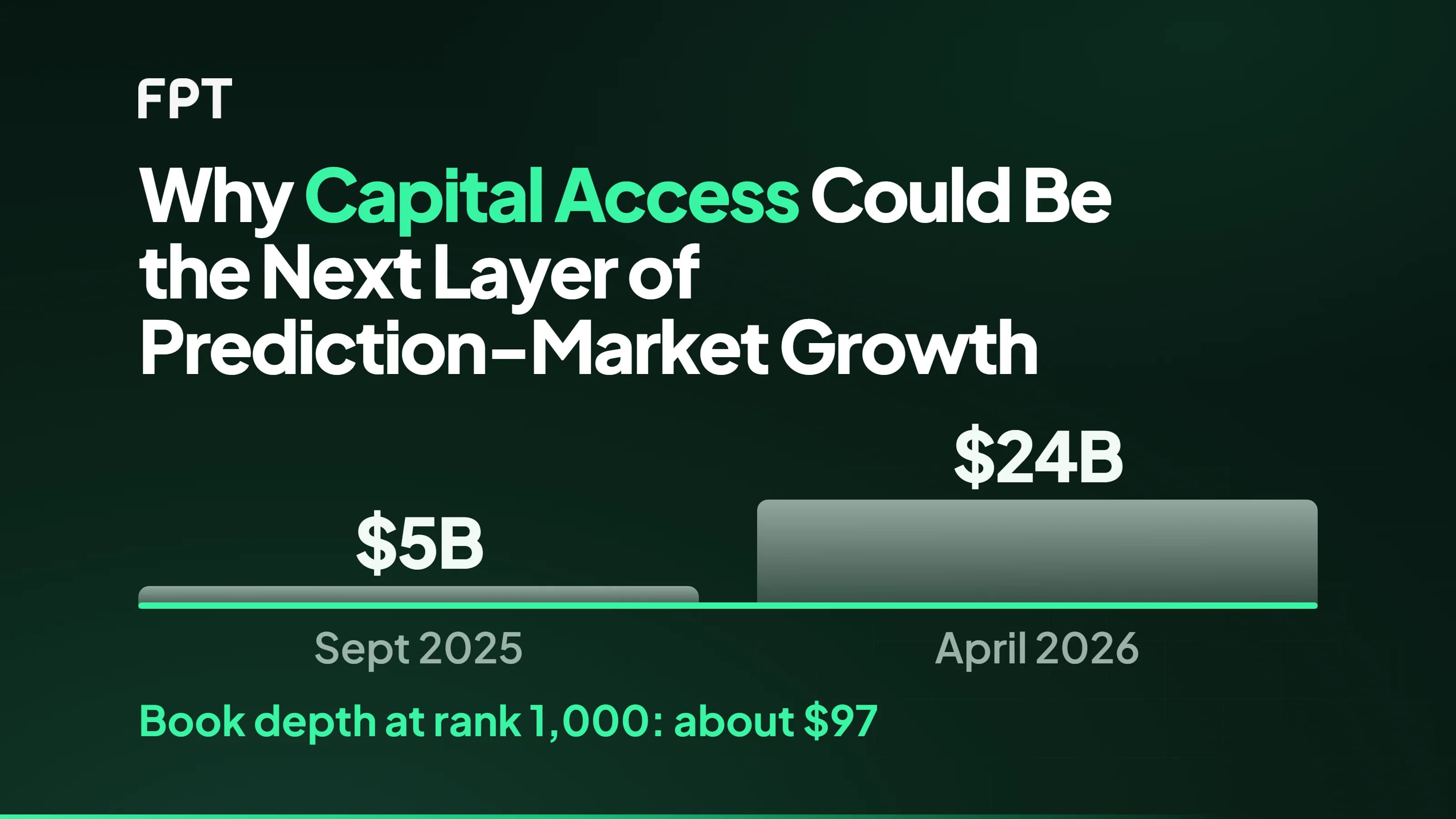
- Combined monthly volume on Kalshi and Polymarket rose roughly fivefold inside seven months.
- Depth within a cent of the best ask collapses once you leave the top few markets.
- What an evaluation offers: published limits, a 90% split, and size that grows with approved payouts.
Futures traders never got size by getting richer. An industry grew up beside that market and rented them a rulebook instead. Pay a fee, pass an evaluation, trade inside published limits, keep most of the profit.
What the rulebook hands over is not money. It is a maximum loss, a drawdown floor that only ratchets up, and a route to a payout. One large evaluation firm has paid over $650 million in rewards since 2015 while calling every account it issues a demo. Traders took the deal anyway.
Prediction markets sit roughly where futures sat before that layer arrived. There is plenty of volume and no route from being right to being sized. Funded Prediction Trader (FPT) is building one version of that bridge. We have an interest in the answer, so every figure below is sourced and every census in it reruns from a public endpoint.
Skill and Money Fail Separately
You can hold a durable read on Ethiopian politics with no balance sheet behind it. A desk can hold the balance sheet and no view at all. Those are two different failures, and almost everything this category fixed in two years was distribution.
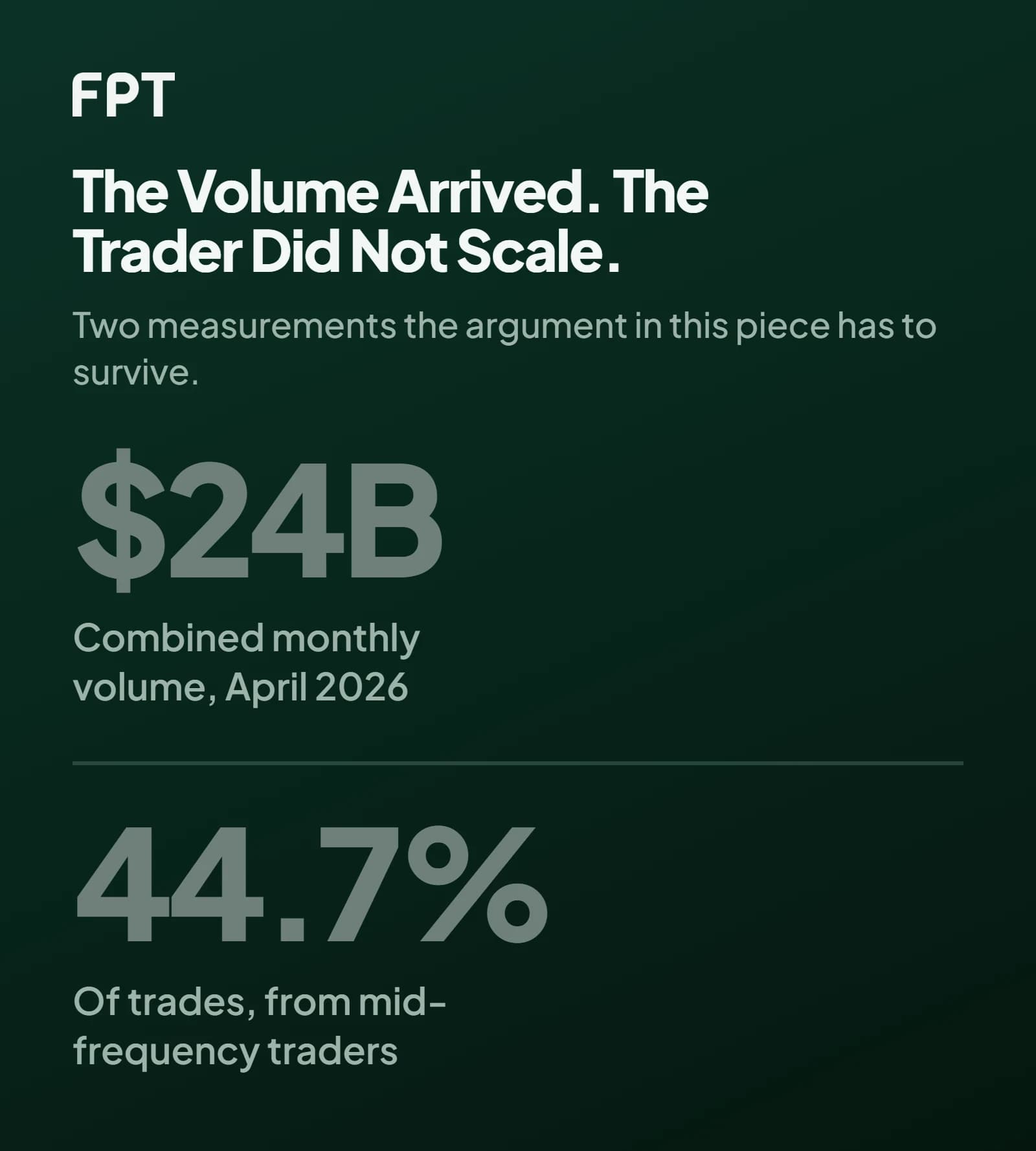
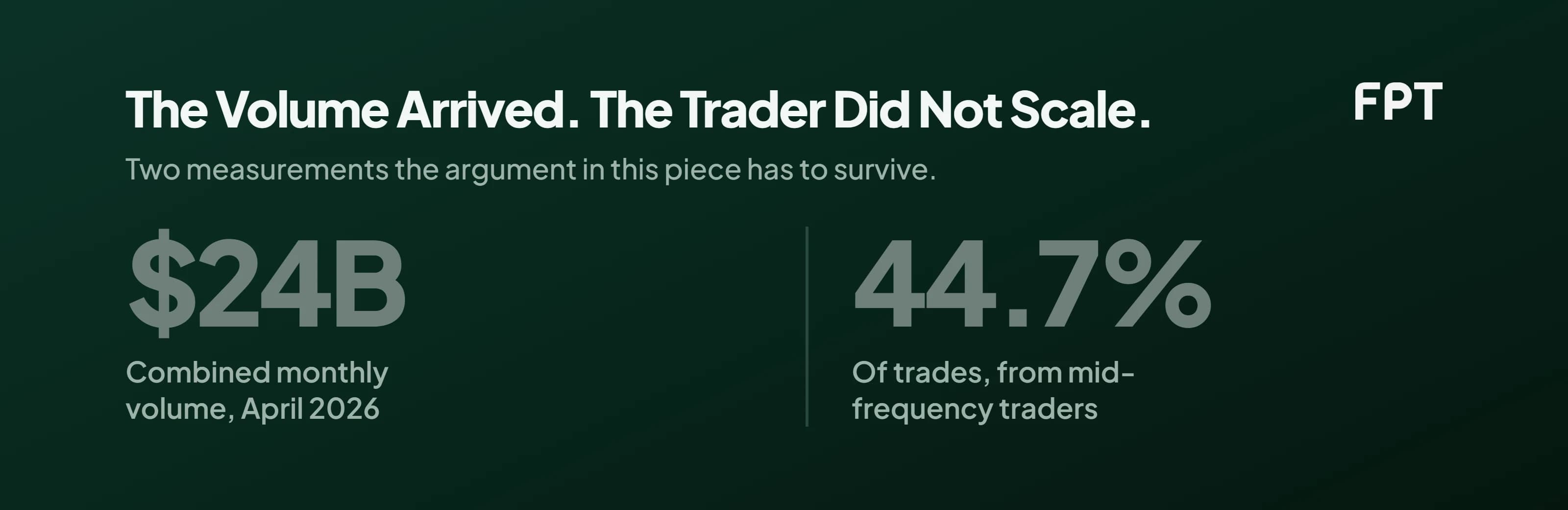
Combined monthly volume rose roughly fivefold in seven months, and supply grew alongside it — the CFTC opened a rulemaking this year on which event contracts may be listed at all. The largest band of on-chain traders by trade count is trading rather than making markets, and it is trading small. None of that is a money story. It is an access story, and what drove the first wave is a separate question.
The Tail Is Where the Edge Lives
What a Full Census Shows
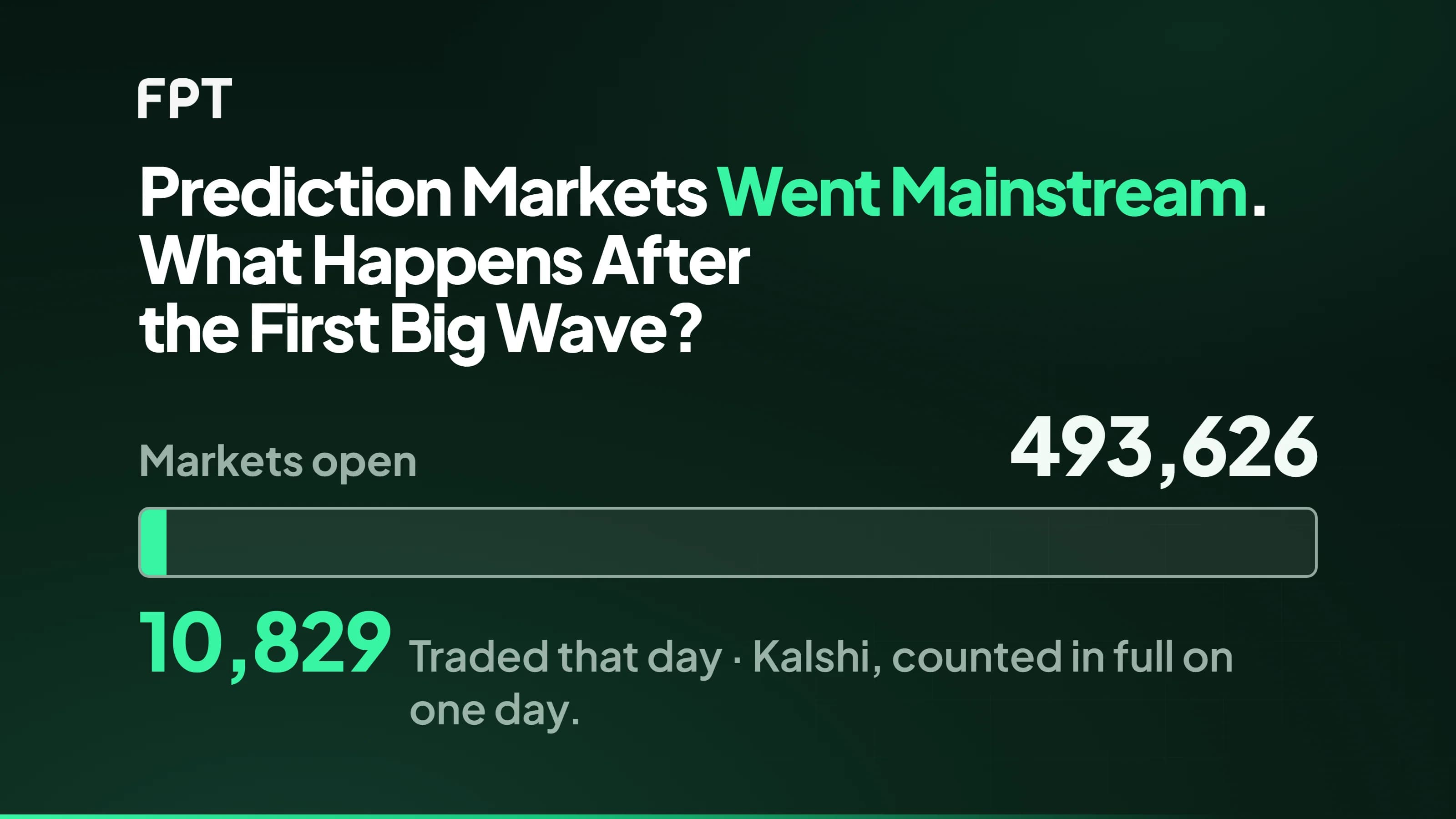
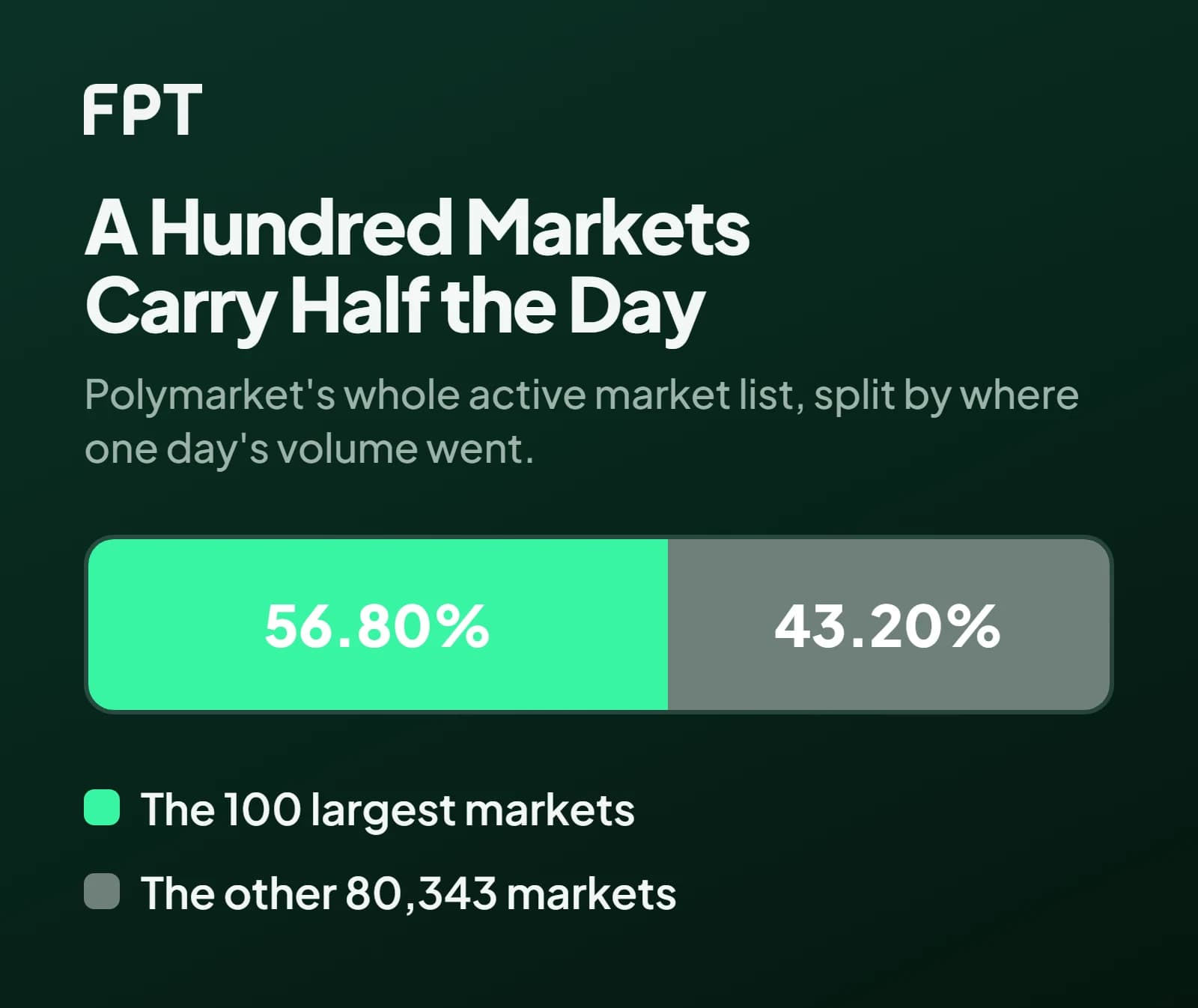
This is the only section built on measurement rather than reasoning. On July 26, 2026 we pulled every market from both venues' public APIs. Polymarket returned 80,443 active markets and Kalshi 493,626 open ones. On each venue, about a hundred markets carried more than half the day.
Depth Runs Out Faster Than Volume Suggests
If you size off a headline volume figure, you are reasoning about a hundred markets, not the one in front of you. Sampled the same day, median depth within a cent of the best ask ran about $5,084 across the fifteen busiest markets, about $249 around rank 500, and about $97 around rank 1,000. The tail needs participants who can post size and sit through a resolution window. Sitting still is a balance-sheet function, not a skill one.
What an Evaluation Opens Up
A Signal Someone Else Can Check
Nobody here can see your record. A rule-bound evaluation is one of the few portable signals you have, because it produces something checkable: you reached a target without breaching a loss limit. Weaker than an audited record. Stronger than a screenshot.
What Passing Demonstrates
It demonstrates process: that you can size sensibly, keep losses small and produce profitable days repeatedly. That is the property a funded account is built on, and it is the one a rule set can actually measure. Being right about a single rate decision is a different skill, and one no evaluation is designed to score.
The path on the $50k FPT Scale account
- Evaluation$3,000 target
- Funded90/10 split
- Approved payoutFive qualifying days
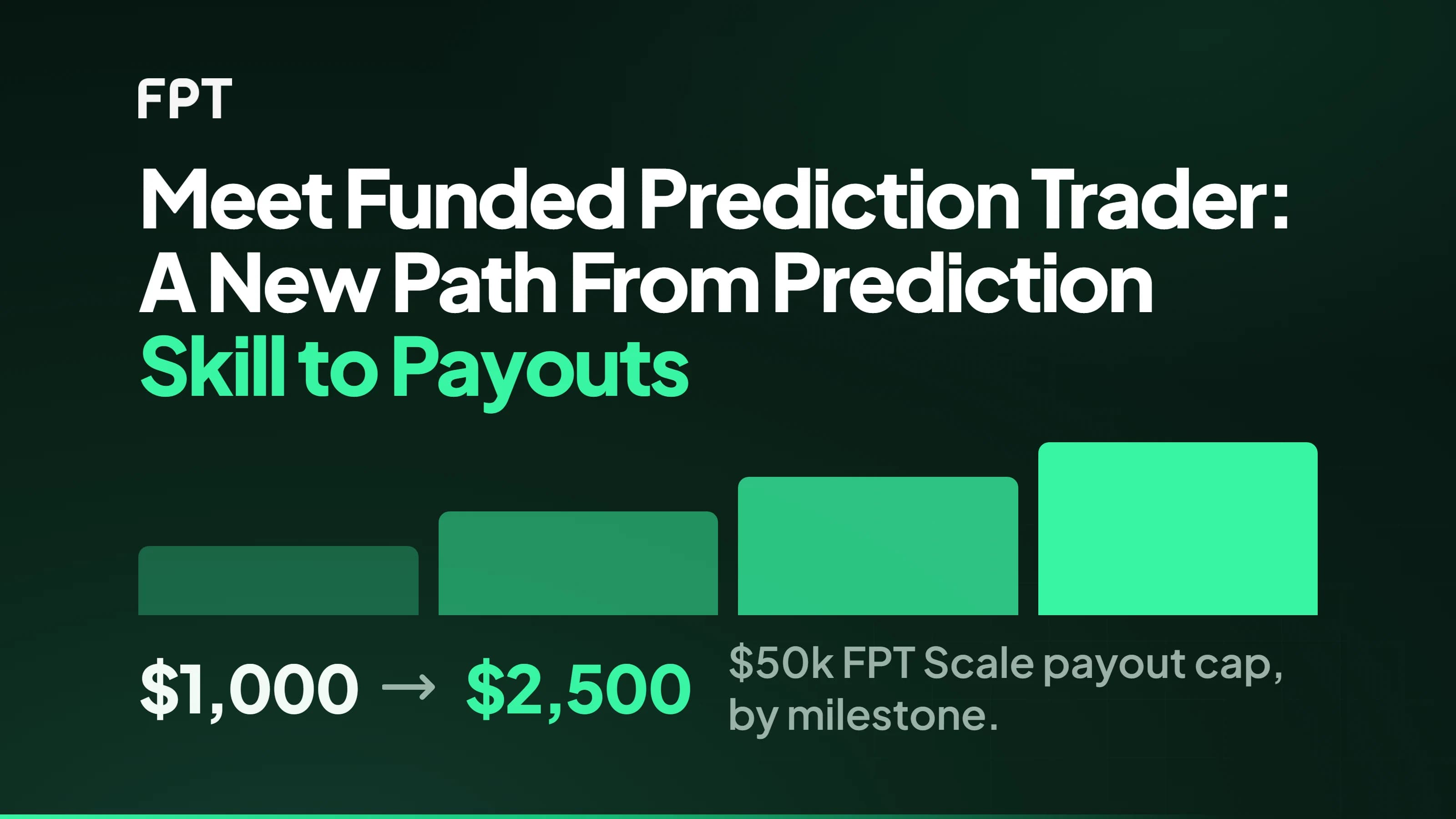
- Top tier$2,500 cap
How the Rules Bind in Practice
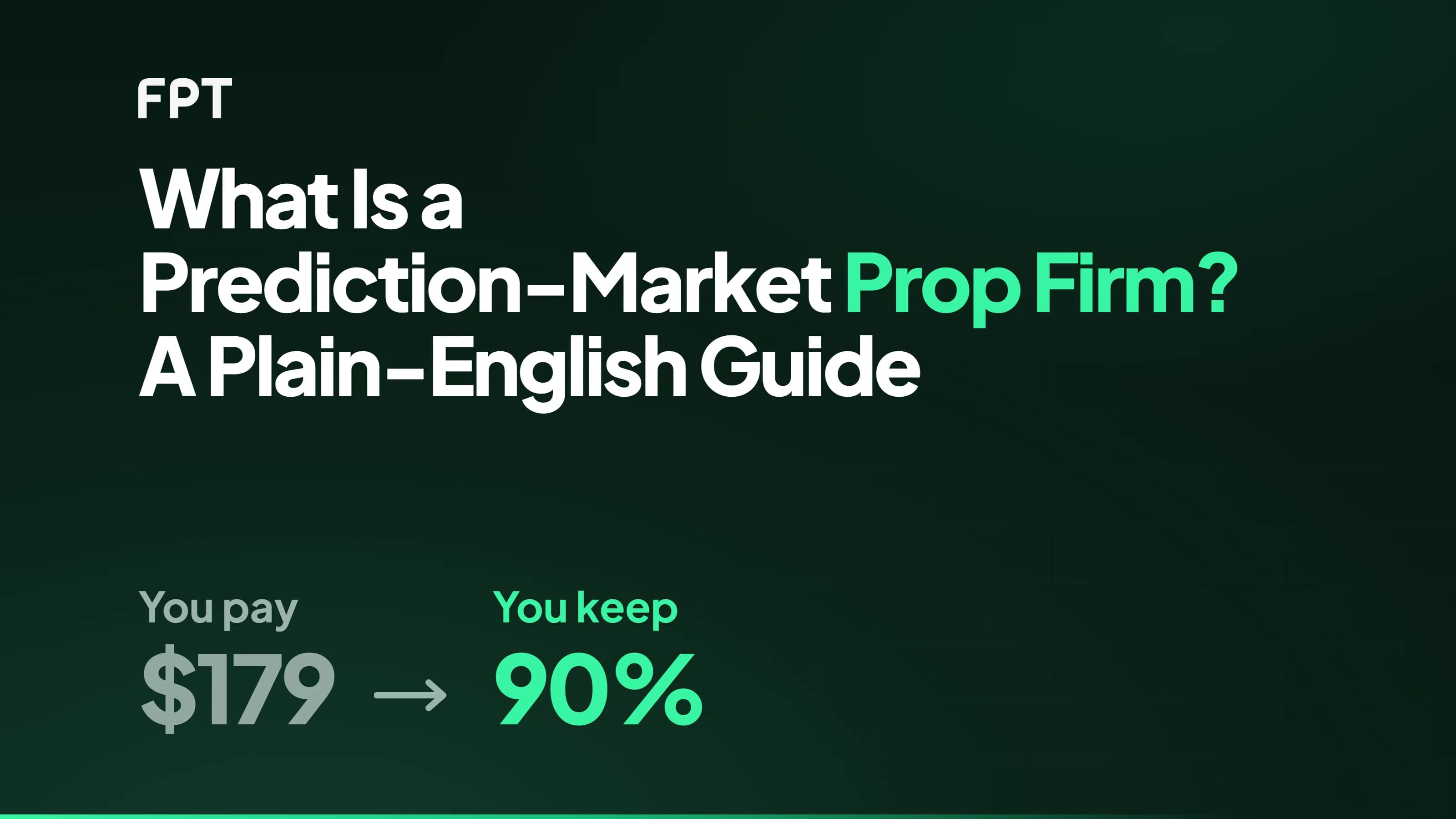
Funded Prediction Trader runs that evaluation on a simulated FPT Scale account, with Polymarket and Kalshi both included. It is one step, not two: one profit target, five profitable days, and no breach of the loss rules. Funded traders keep 90% of profit from their first approved payout, sent within 48 hours of approval, and approved payouts raise the payout cap and the max open size up to a fixed ceiling. FPT is not affiliated with Polymarket or Kalshi, and venue availability may depend on your location, exchange access, market availability and applicable restrictions.
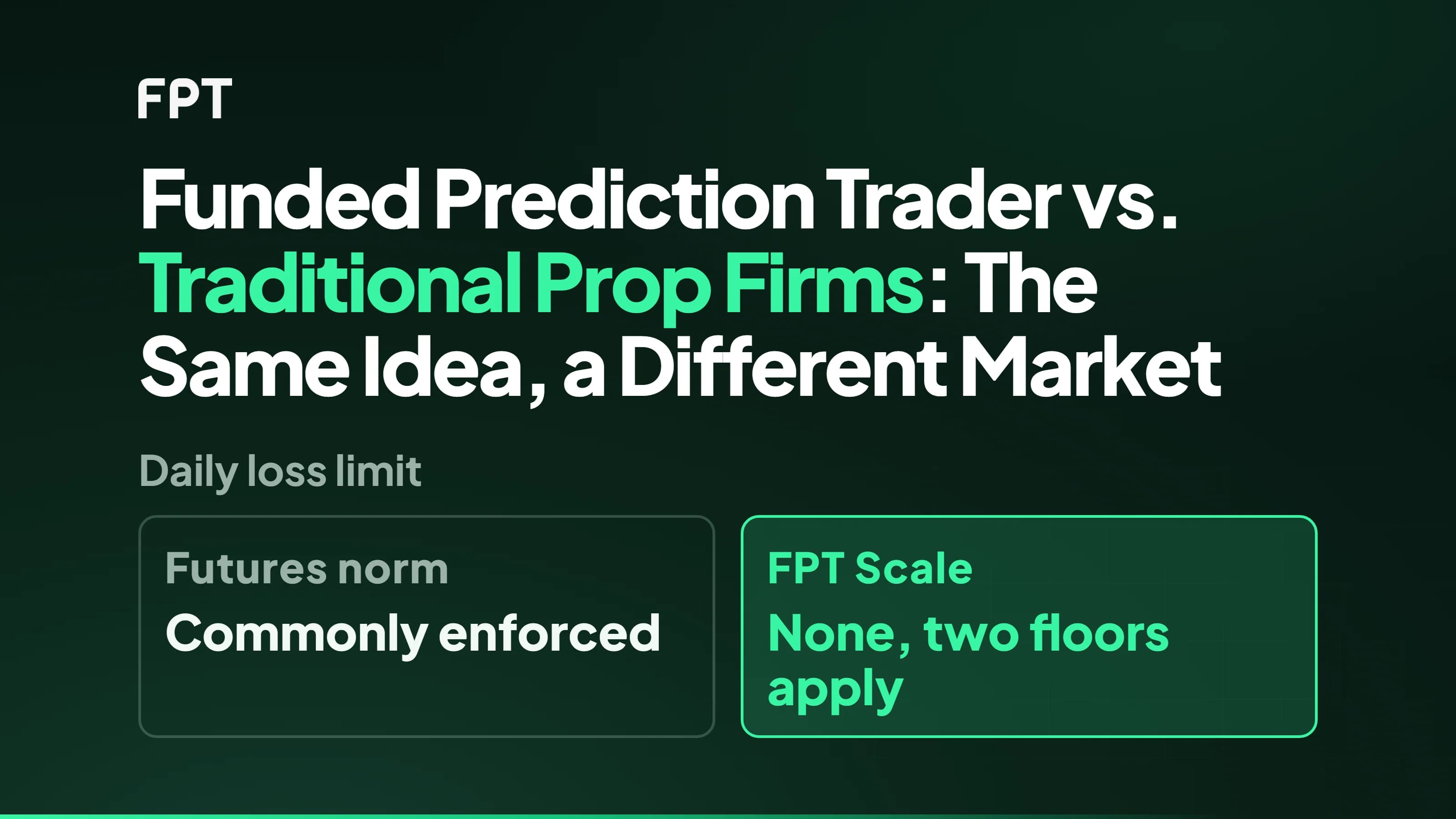
There is no separate daily loss limit. A max loss and an end-of-day trailing drawdown both still apply, and no single day may be more than 40% of your total profit. The rest sits in FPT's published rules and in what a prediction-market prop firm is.
Say You Find a Quiet Market
Say you find a quiet market and you like the price. Two ceilings apply at once, and the lower one always wins: your account's max open size, and five percent of that market's 24-hour volume. On a thin book the market decides your size, not your account.
Worked example
The 5% Rule on a Thin Market
- Account, first funded tier
- $50k FPT Scale
- Max open size
- $1,000
- Volume cap
- 5% of that market's 24-hour volume
The lower ceiling wins. Only the book moves it.
Three Things That Shape the Model
Three things shape how this works in practice, and each is worth understanding before you decide.
Three things worth understanding before you decide
What the Evaluation Fee Covers
- The fee buys the evaluation attempt.
- Rules, caps and the ceiling are published before you pay.
- Your cost is the fee; there is no deposit to fund.
Cadence Beats One Big Call
- A year can be four large events.
- A 40% consistency rule caps one big day.
- Five profitable days reward a repeatable process.
Liquidity Still Sets the Ceiling
- Venues already pay for quotes.
- Polymarket routes 15% to 25% of taker fees.
- Whether paid positions deepen books is unproven.
Take the first one properly. You pay for the evaluation attempt, not for a place in a queue, and what that fee buys is defined before you spend it: the profit target, the loss rules, the payout cap and the scaling ceiling are all published up front. An incentive you can check beats one you have to trust. And the exposure is bounded — the fee is the whole of it, with no deposit and nothing to top up.
The second is about cadence. A consistency rule plus five profitable days selects for traders who trade often rather than for traders who are right twice a year and enormous about it. That is a genuine fit question, and it is published in full before you pay so you can answer it for yourself.
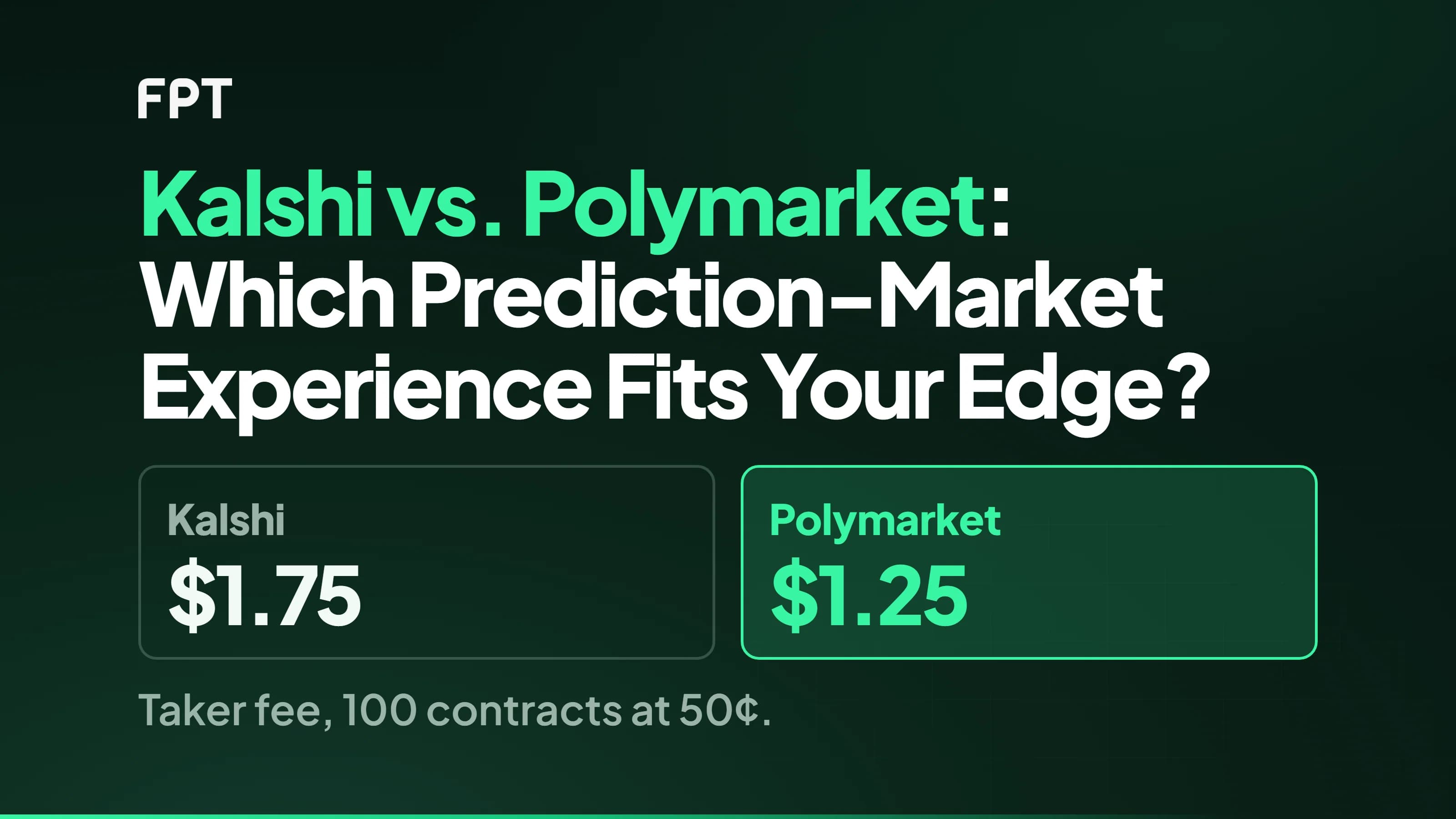
The third is the one the venues are already answering. Polymarket routes 15% to 25% of taker fees into a daily maker rebate pool, and Kalshi files liquidity incentive programs with the CFTC. Whether paying for quotes and paying for positions produce the same depth is unproven.
Size Is Not the Same as Account Size
FPT caps you at five accounts, so combined nominal account size tops out at $500,000. Account size is the benchmark that targets, max loss and drawdown are measured against, not cash paid to you and not capital you deploy. Across five fully scaled $100k accounts, maximum simultaneous open exposure is $17,500. That is what the market-volume rule is for: it sizes you to the book actually in front of you.
What We'll Measure Next
One measurement matters more than the rest, and the next census is what updates it.
Four Things We Are Watching
- Concentration in next year's census, against this year's 56%.
- Venue rebates, and whether they deepen the long-tail books alone.
- Pass-rate data, once there is enough of it to publish.
- CFTC rulemaking on which contracts get listed.
Start with the depth section. The census reruns from two public endpoints on any day you pick, so it is the one claim you can check for yourself. If the shape does not hold in three months, the correction is ours to print. For how this desk handles proof before launch, read the founding note.
Where to Go From Here
- Read FPT's published rules and judge the limits yourself.
- Read what a prediction-market prop firm is for the mechanics.
- Join the FPT Discord for launch updates. The founding price goes to the first 100 eligible completed purchases after checkout opens.
Sources & Method
Category volume and concentration figures come from complete censuses of both venues' public APIs taken on July 26, 2026, alongside published first-party documentation, one Pew Research Center analysis and two CFTC records. Every FPT rule cited is checked against the published FPT Scale rules.
- Trading volume on prediction markets has soared in recent months — Pew Research Center, May 27, 2026. Accessed Jul 26, 2026.
- Prediction Markets; Public Interest Determinations — Commodity Futures Trading Commission, Jun 12, 2026. Accessed Jul 26, 2026.
- Gamma API, /markets/keyset endpoint (complete active-market census) — Polymarket. Accessed Jul 26, 2026.
- Kalshi Trade API, /markets endpoint (complete open-market census) — Kalshi. Accessed Jul 26, 2026.
- Polymarket CLOB API, /book endpoint (order-book depth sampling) — Polymarket. Accessed Jul 26, 2026.
- How Prediction Markets Scaled to USD 21B in Monthly Volume in 2026 — TRM Labs, Mar 27, 2026. Accessed Jul 26, 2026.
- What is Polymarket? — Polymarket. Accessed Jul 26, 2026.
- Maker Rebates Program — Polymarket. Accessed Jul 26, 2026.
- KalshiEX LLC: Amendment to August 2025 Liquidity Incentive Program — Commodity Futures Trading Commission, Feb 11, 2026. Accessed Jul 26, 2026.
- About Us — FTMO. Accessed Jul 26, 2026.
Common Questions
Is capital access really the constraint on prediction-market growth?
The concentration is measured: on both major venues, about 100 markets carried roughly 56% of a single day's volume on July 26, 2026. That capital access is what holds the rest of the book back is the argument this piece builds on that finding.
Do funded traders make prediction-market prices more accurate?
Not yet established, and this piece treats it as the open question it is. A rule-bound account selects for traders who can lose small and trade often, which is not the same property as being right. Pass-rate and performance data is what settles it, and there is not yet enough of it to publish.
Who is an evaluation-based funded account wrong for?
Two groups. Traders whose year is four large event positions, because a 40% consistency rule caps how much of total profit one day may carry. And traders whose edge lives only in thin books, because any one market is capped at 5% of its 24-hour volume.
What does a simulated trading account mean here?
FPT Scale accounts are simulated trading accounts. Account size is the benchmark that the profit target, max loss and drawdown are measured against. It is not cash paid to you and it is not capital you deploy.
Referenced on this site