TL;DR
Rule discipline transfers from futures prop trading to prediction markets almost untouched: loss budgets, trailing thresholds, sitting flat. Sizing changes shape: set in dollars, capped by how thin the market is. Chart reading transfers worst. Resolution risk, being right about the world and wrong about the wording, is the one skill you build from scratch.
- Loss-budget habits and trailing-threshold reflexes arrive almost unchanged.
- Size is set in dollars and capped by each market's own daily volume.
- FPT Scale: one evaluation phase, five profitable days, 90% of your profit.
- Read the resolution wording before you build the thesis.
It is mid-afternoon and you are flat. Not because the setup went away. Your best day already sits just under your program's consistency cap, and one more good hour fails you on a rule.
That is how most evaluations end. Nobody blows up. They stall. It is also why funded futures traders keep opening Polymarket and Kalshi in a second tab, with one blunt question. Does any of this count over there?
What an Event Contract Actually Is
An event contract is a yes-or-no claim on something that either happens or does not. Polymarket describes winning shares as "redeemable for $1.00" and losing shares as "worth $0.00", traded on a "peer-to-peer order book (CLOB)". Kalshi lists the same instrument under the Commodity Futures Trading Commission, "regulated as a Designated Contract Market (DCM)".
The Price Is Already the Probability
The price also does something a futures price never does. A contract trading at sixty-three cents is the market saying sixty-three percent. Your view and the quote finally share a unit, so the translation from read to target to stop to size simply disappears.
The Price Is the Probability
Where FPT Fits
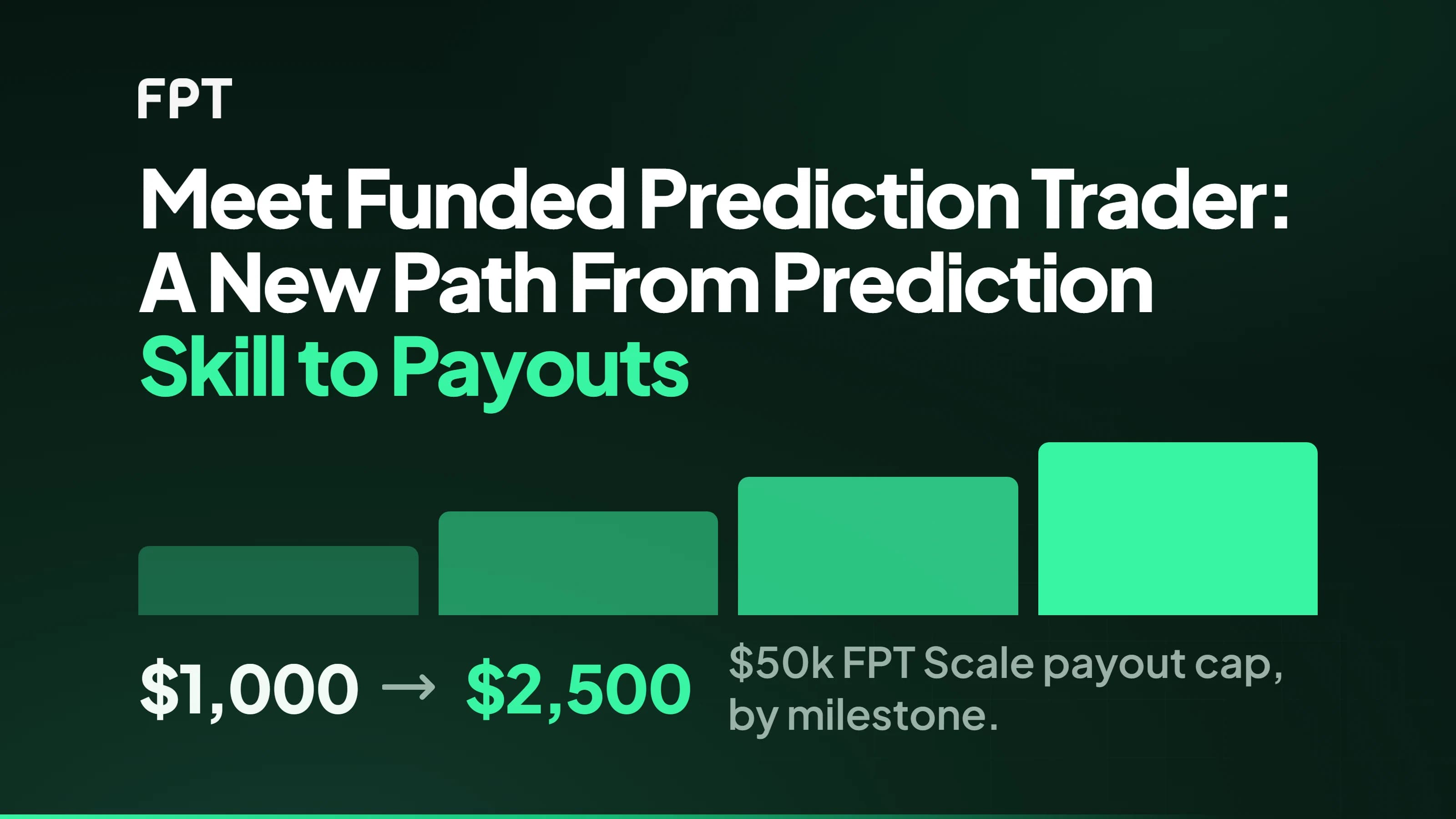
Funded Prediction Trader (FPT) runs the prop-firm model on Polymarket and Kalshi, which is why this question stopped being hypothetical. You can pass a one-step evaluation and trade funded on event contracts. What changes is the playbook, not the discipline, and the rest of this piece sorts which is which.
The Transfer Audit, in Three Piles
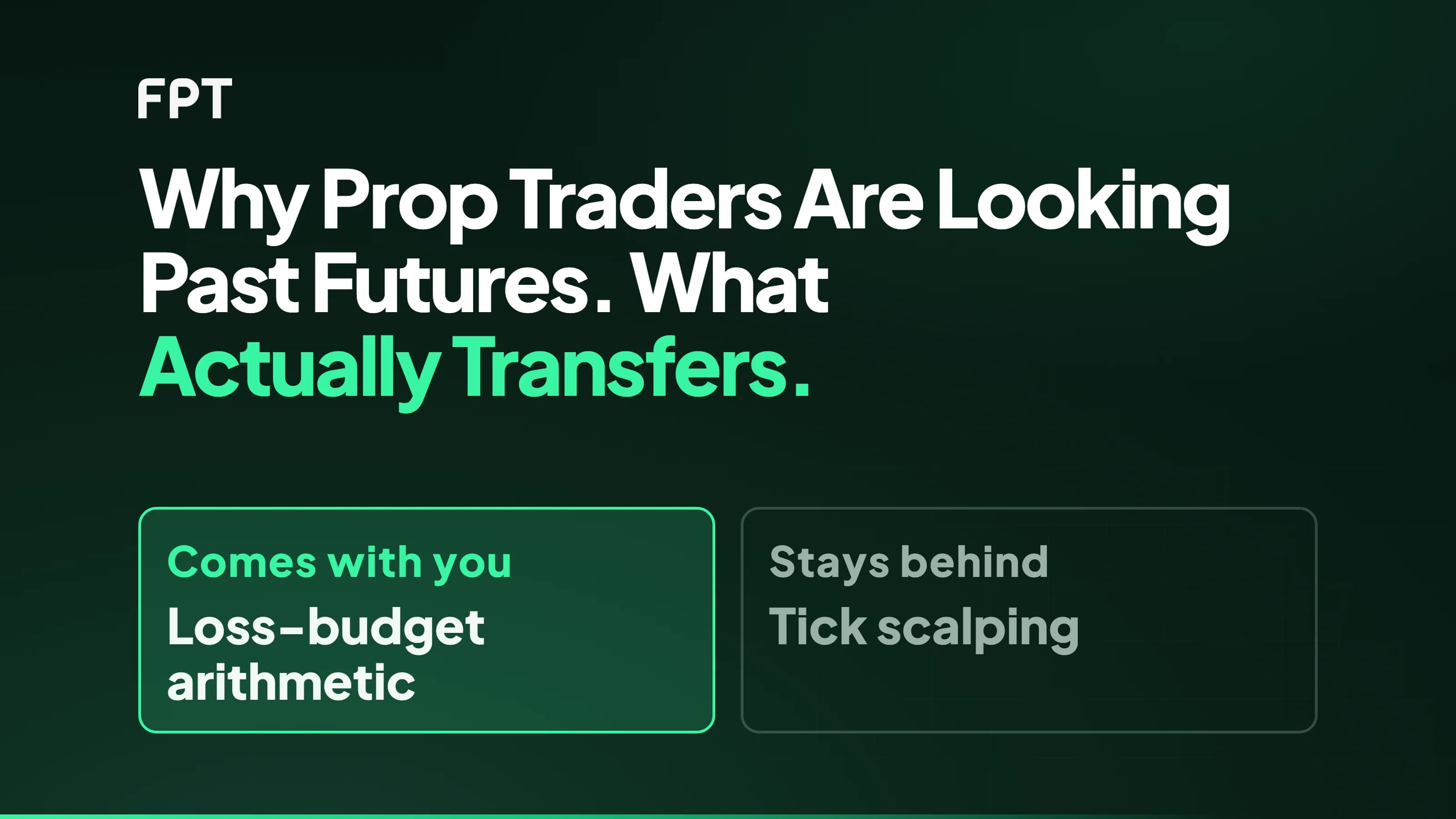
Three answers, and only three: risk discipline transfers, sizing changes shape, and chart reading is worth nothing here. Sort your own skills into these piles before you sort a single market.
What Transfers, What Does Not
Comes With You
- Loss-budget arithmetic
- Trailing-threshold reflexes
- Order-book literacy
Changes Shape
- Position sizing
- Book depth
- The circuit breaker
Stays Behind
- Tick scalping
- Chart patterns
- Gap instinct
The first pile is habit, and habit is portable. Trading a budget still beats trading a conviction, the drawdown still ratchets up and never down before it locks near your start, and working an order still pays in the busiest markets. The last pile is the expensive one. A contract that is days old and settles exactly once has no pattern to read, a binary does not gap, and a market trading a few hundred dollars a day cannot fund tick scalping. Everything in the middle pile is what the rest of this piece works through.
Sizing Is in Dollars Now
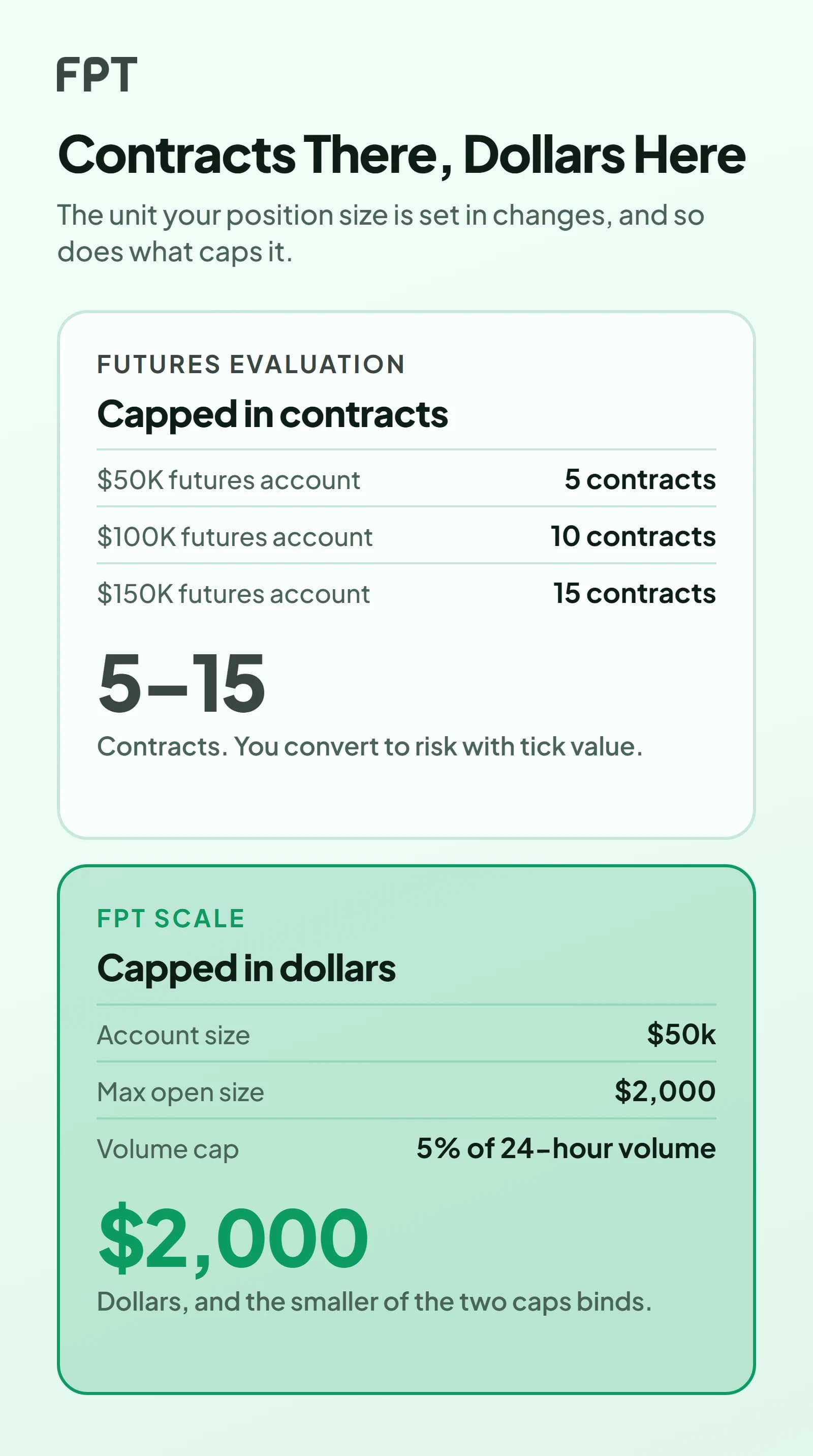
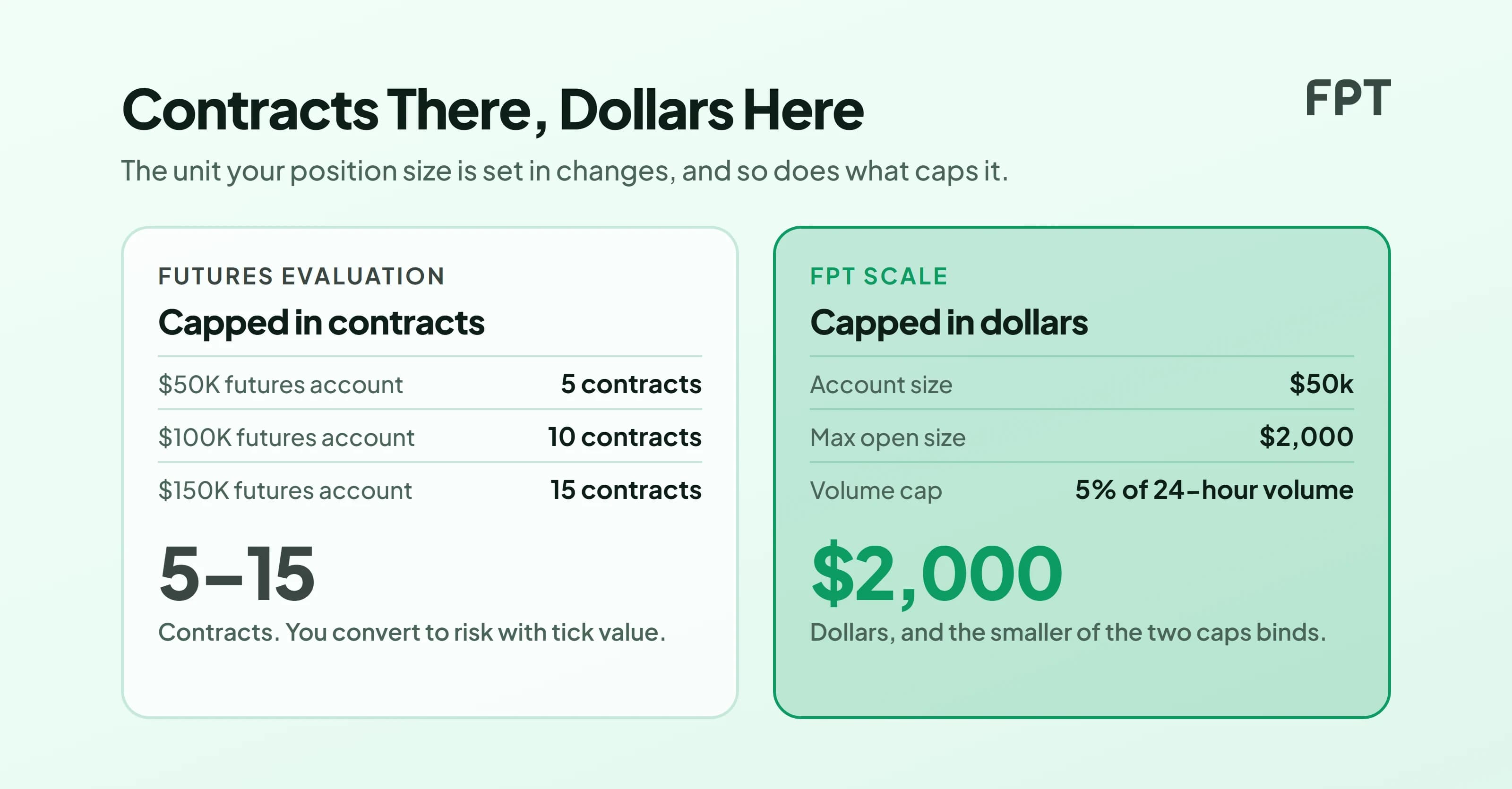
Futures evaluations cap you in contracts. One published parameter sheet allows 5, 10 and 15 across three account sizes, which you convert into risk using tick value. An FPT Scale account states a max open size in dollars instead: $2,000 on the $50k evaluation account, and that figure covers everything you hold at once.
The Market Sets a Second Ceiling
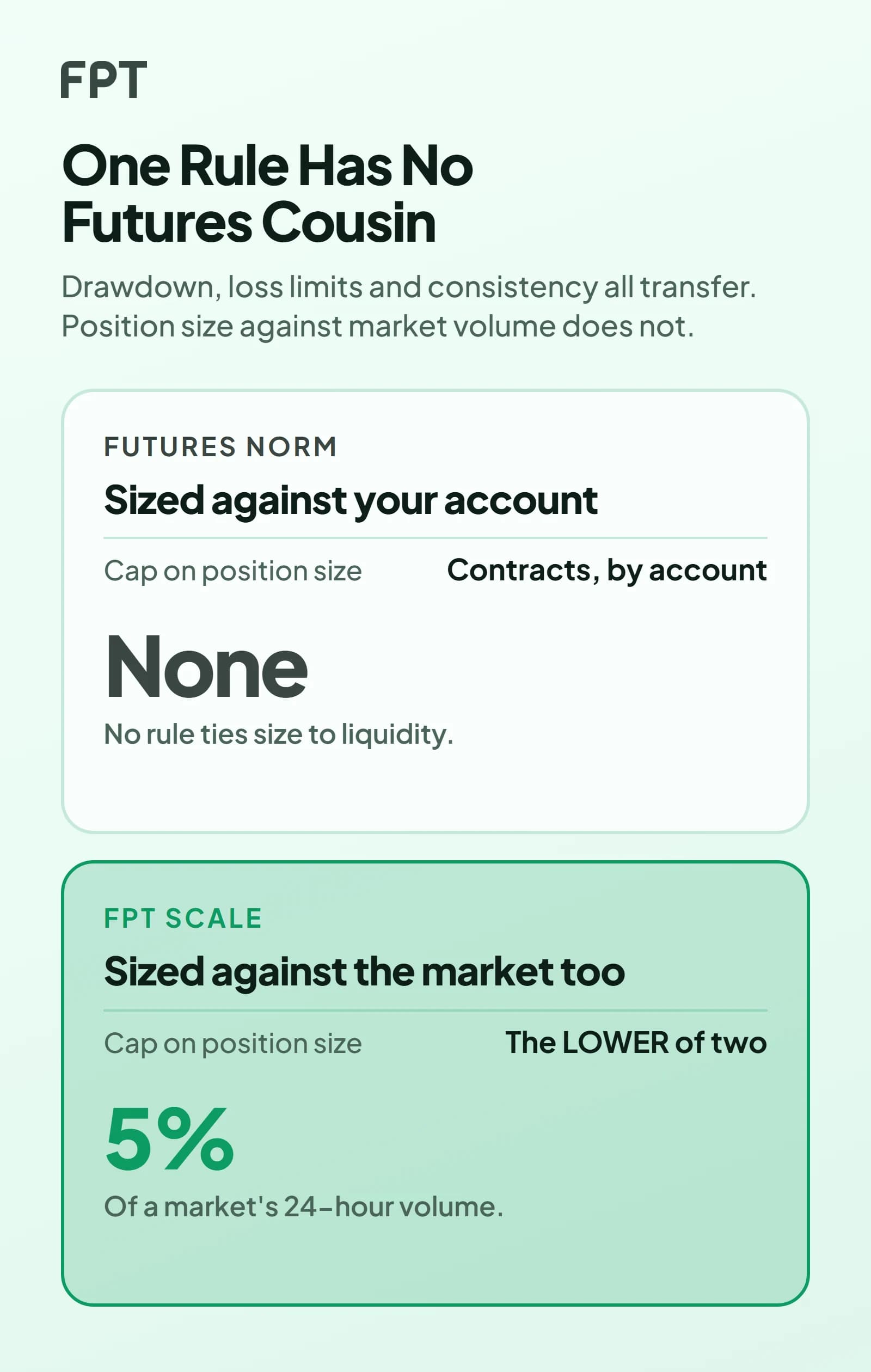
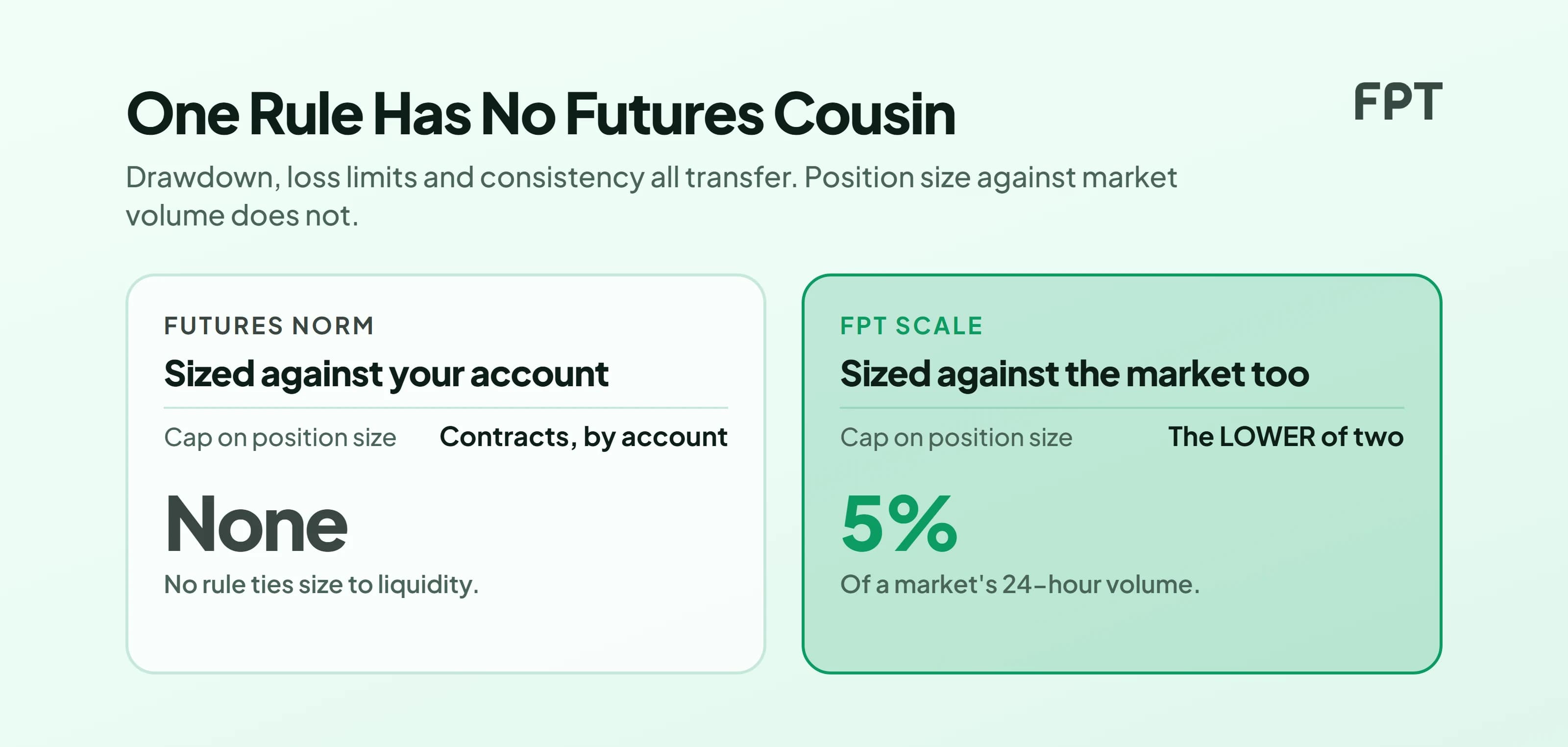
This second limit has no futures cousin. Any one market is capped at 5% of its own daily volume, so what a market will let you open is whichever is smaller — what your account has left of its max open size, or that market's 5%. An order over either line is blocked before it goes through, not counted as a breach.
Say you hold that evaluation account and two markets look interesting on the same morning. The same account will permit very different sizes in each of them.
Worked example
One Account, Two Markets
- Evaluation account
- $50k FPT Scale
- Max open size
- $2,000
- Market A, daily volume
- $10,000
- Market B, daily volume
- $100,000
Thinner market, smaller position. Account size never enters it.
How Deep the Books Actually Are
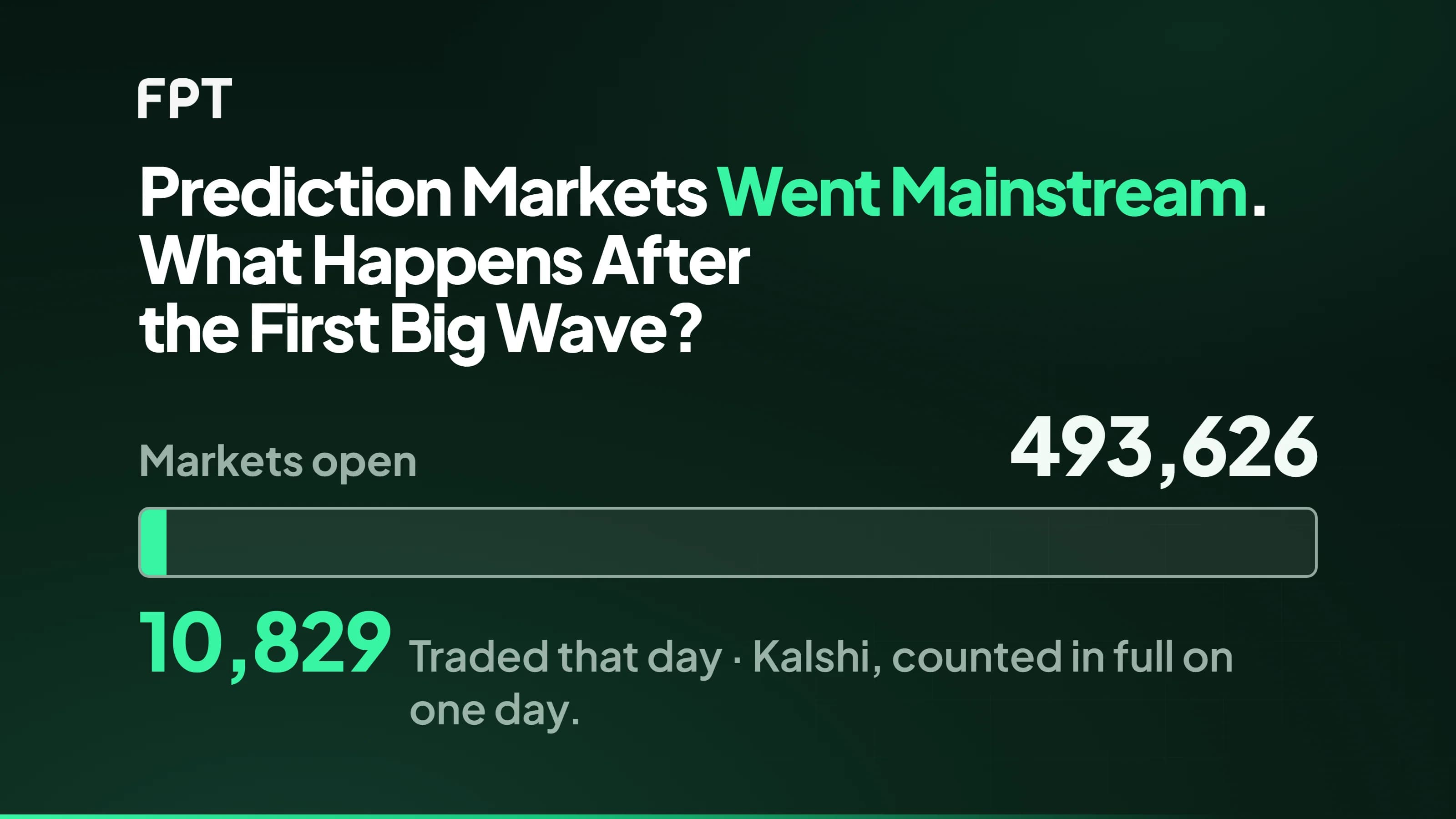
Depth is the objection every futures trader raises first, and it deserves a count rather than an opinion. In late July 2026 the FPT desk paged both venues' public market APIs to the end.
What the Census Found
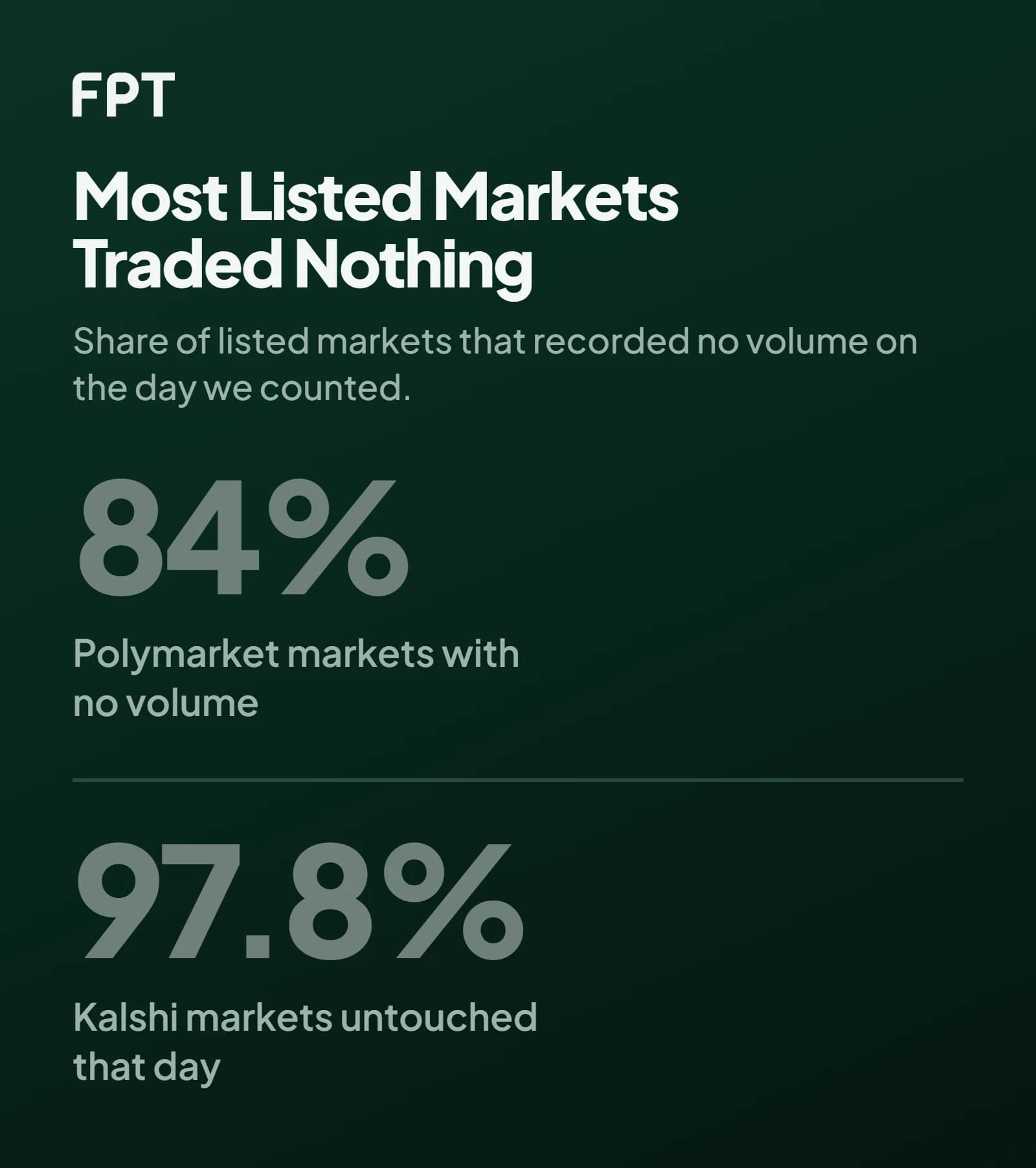
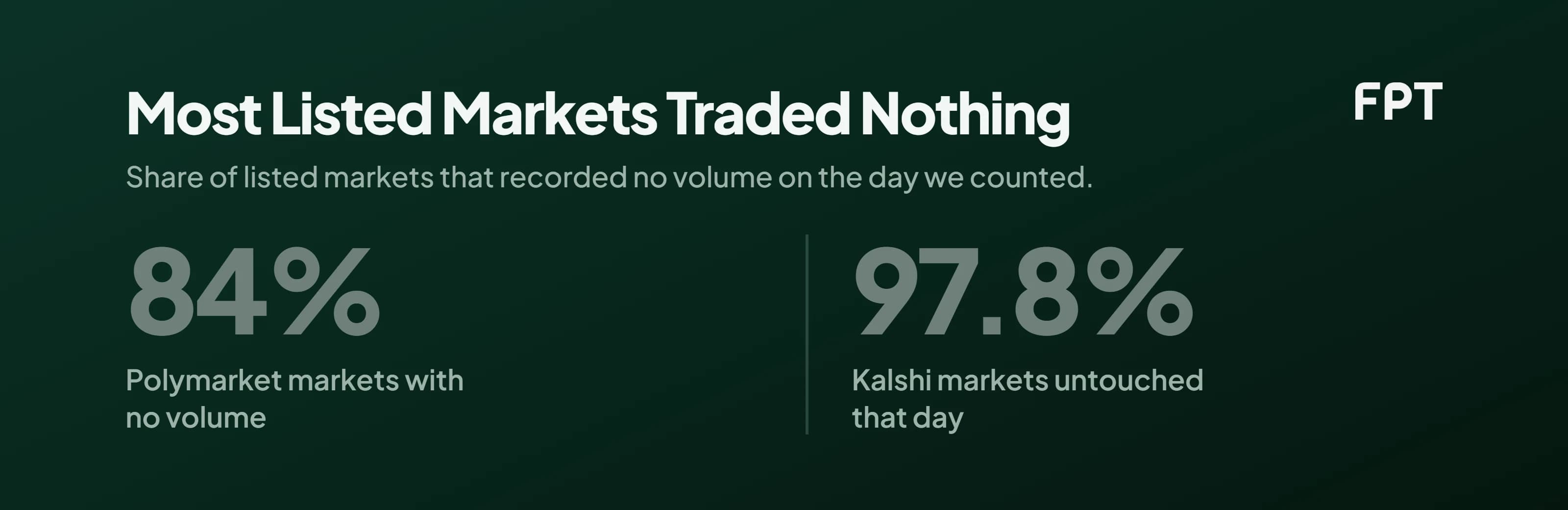
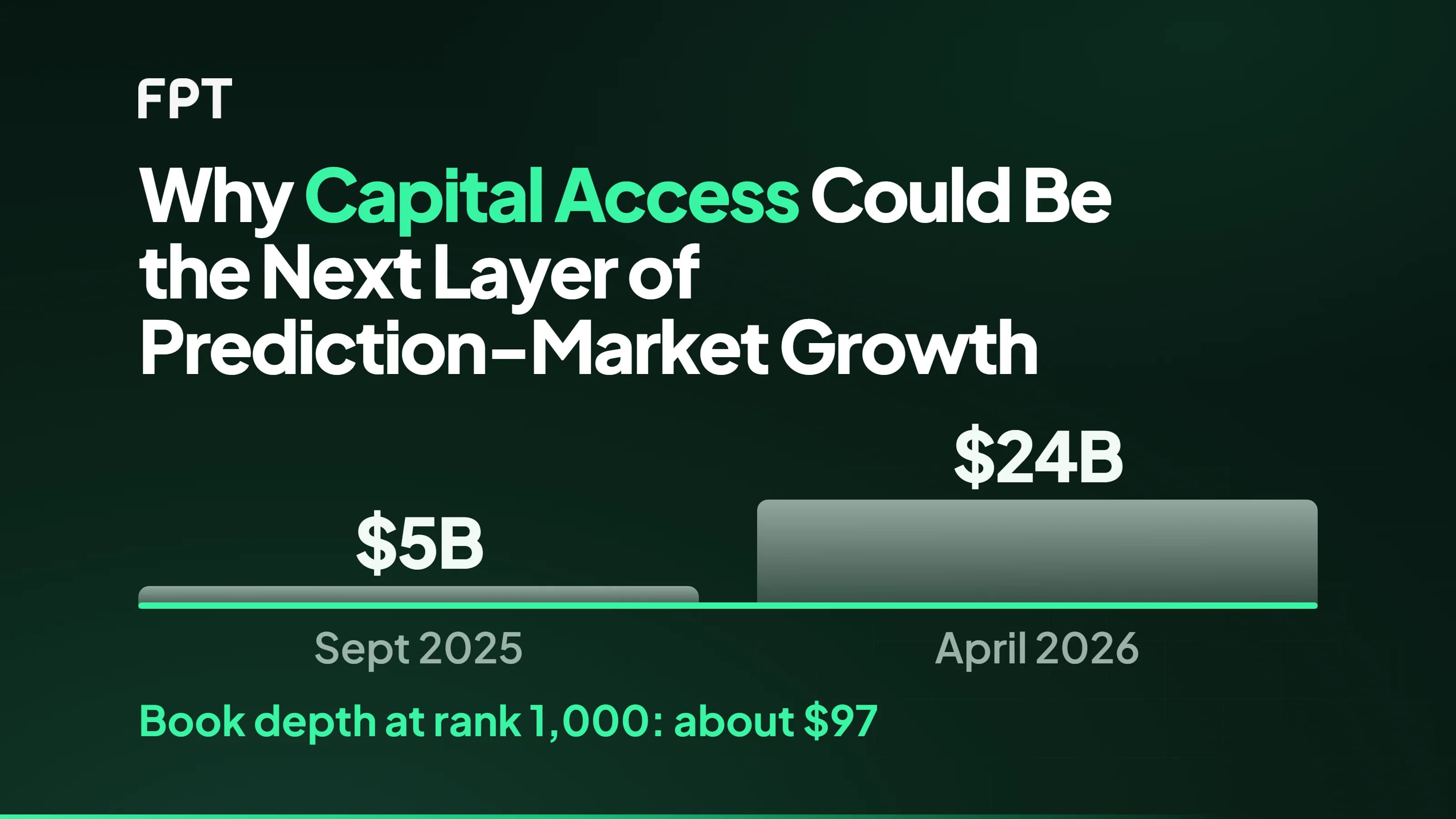
Concentration is the other half of that count. On the same day, 56.8% of Polymarket's volume sat in its hundred busiest markets. The growth around it is real — combined volume across both venues reached about $24 billion a month by April 2026, per Pew Research Center — and on the day counted it was still landing in that narrow band. The venue comparison has the rank-by-rank figures.
Around the two-thousandth market by volume, the median resting size within a cent of the ask was $139. In futures, thin depth costs you a tick or two and you are in. Here it can mean no room at any price. A max open size is a permission, not a capacity.
You Can Sell Early. A Buyer Has to Be There.
You may sell shares at any point before the market is resolved… a limit order will only be executed if/when there is a willing buyer for your shares at the price you set.
Read the second clause twice. Exits do exist, which surprises traders expecting something closer to a ticket. On a deep futures contract that caveat is theoretical. On a thinly traded market it is the whole trade.
The Rule Set, in Your Vocabulary
Take an FPT Scale account. One evaluation phase, no phase two. On the $50k account the profit target is $3,000, max loss is $2,000, and passing takes five profitable days. The $50,000 is the benchmark those numbers are measured against, not money handed to you.
The Circuit Breaker Is Yours Now
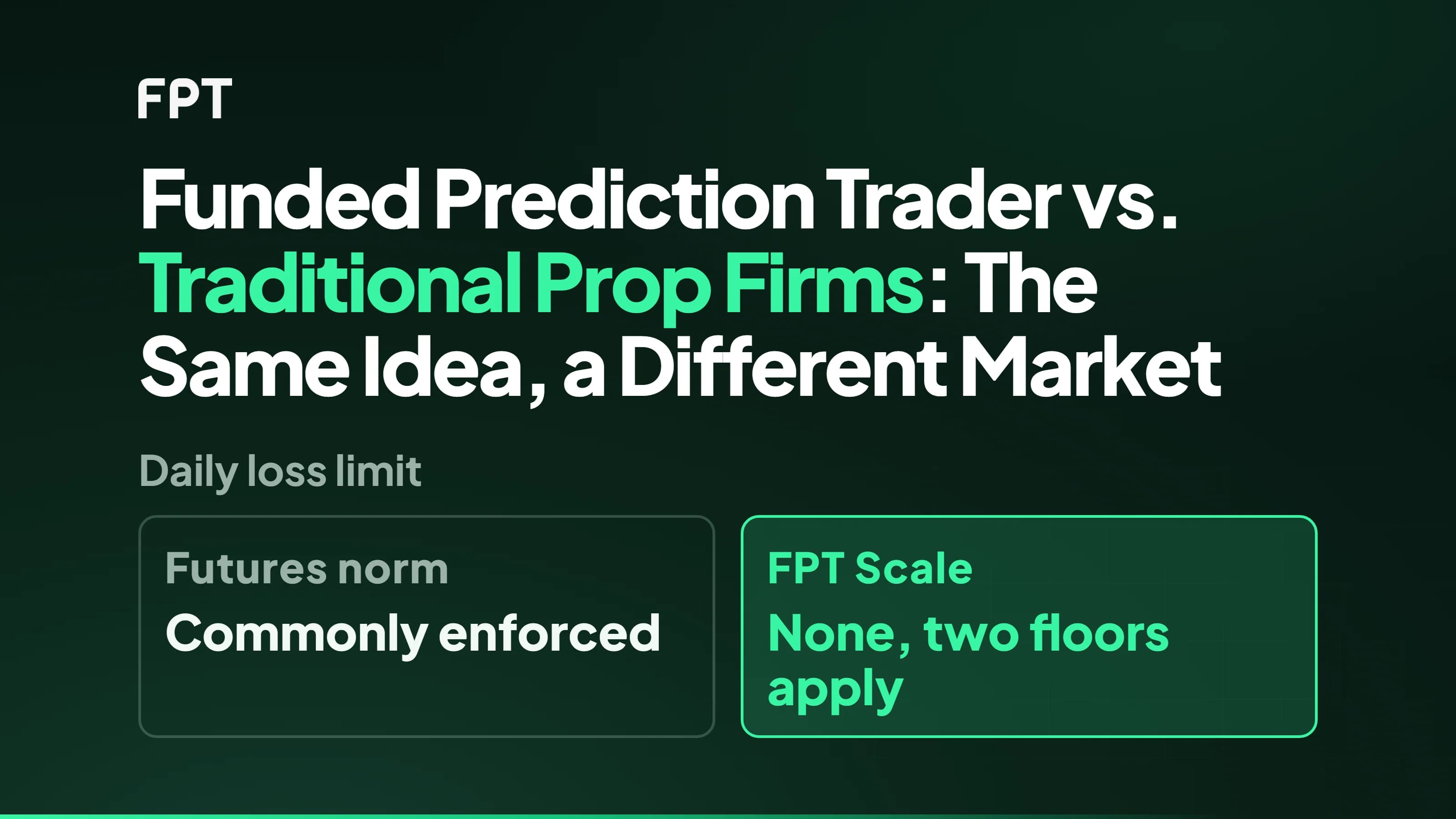
Futures programs commonly stop your day for you. FPT Scale accounts have no separate daily loss limit. The max-loss rule and the end-of-day trailing drawdown both still apply, so one bad session can still end an account. Nobody flattens you at lunchtime any more. You do.
Consistency Is 40% Here, and Checked Twice
Consistency is set at 40%: no single day may account for more than 40% of total profit. That binds in the evaluation and in every funded payout cycle. Futures programs commonly publish a looser number. The rule-by-rule comparison walks the line.
The money side is simpler than the rule sheet suggests. The split is 90% to you, approved payouts are sent within 48 hours of approval, and approved payouts raise both your payout cap and your max open size, up to a fixed ceiling.
What Your Trade Log Decides
The first two questions are structural, not temperamental. Your own trade log settles them in minutes.
Run this against your last twelve months
- Did a handful of enormous days make your year?
- Does your edge live in thin books?
- Do you need a published payout record first?
Audit your own book before you audit a new market. If the money came from three enormous days, the consistency rule will surface that during the evaluation. If it came from being early where nobody was looking, price the depth curve rather than the fee. FPT is pre-launch, and the founding note sets out how the desk handles proof before launch. Then the account builder has the rules size by size.
Sources & Method
The futures side of this audit was checked against first-party rule pages at three funded-trading firms rather than review or affiliate sites, and is described here as a category norm because the parameters differ from firm to firm. The liquidity figures come from a census of both venues' public market APIs run by the FPT editorial desk on July 26, 2026, with order-book depth sampled live in six volume-rank bands. FPT Scale figures are the published $50k FPT Scale rules.
- Trading Objectives | FTMO.com — FTMO, May 13, 2026. Accessed Jul 26, 2026.
- Trading Combine® Parameters — Topstep, Jun 24, 2026. Accessed Jul 26, 2026.
- MAX EOD Trailing — My Funded Futures, Mar 2, 2026. Accessed Jul 26, 2026.
- Polymarket 101 — Polymarket. Accessed Jul 26, 2026.
- How is Kalshi regulated? — Kalshi, Mar 19, 2026. Accessed Jul 26, 2026.
- Can I Sell Early? — Polymarket, Jan 11, 2026. Accessed Jul 26, 2026.
- Trading volume on prediction markets has soared in recent months — Pew Research Center, May 27, 2026. Accessed Jul 26, 2026.
- Polymarket Gamma API, active markets endpoint — Polymarket. Accessed Jul 26, 2026.
Common Questions
Does experience with a futures prop evaluation count for anything in prediction markets?
The rule-following half of it does. Loss-budget arithmetic, respect for a trailing threshold, counting profitable days and sitting flat instead of forcing a trade all arrive intact. The market-reading half gets rebuilt, because an event contract has a short life, a binary payoff and a resolution document instead of a price history.
Is position size in prediction markets set in contracts or in dollars?
In dollars. An FPT Scale account states a max open size as a dollar figure rather than a contract count, and it caps everything you hold at once; each market is also capped at 5% of its 24-hour volume. The thinner the market, the smaller the position it will permit.
What is resolution risk, and is there a futures equivalent?
Resolution risk is being right about the world and wrong about the contract. Settlement follows the criteria and the source named in the contract, so a market can settle against a view that turned out to be correct. Futures has no clean analogue for it.
How does an FPT Scale trader get paid?
You keep 90% of your profit. A funded payout cycle is five qualifying days with your largest day at 40% or less of the cycle's net profit, and an approved payout is sent within 48 hours of approval. Approved payouts also raise your payout cap and your max open size, up to the ceiling published for your account size.
Does an FPT Scale account have a daily loss limit?
No separate daily loss limit applies on FPT Scale accounts. The max-loss rule and the end-of-day trailing drawdown still do, so an account can still fail on one bad session. The circuit breaker a futures program enforced for you is now yours to enforce.
Referenced on this site